
 how-to
How to Tell If Windshield Needs Replacement: 2026 Guide
Table of Contents
- Repair vs. Replacement: The Six-Inch Rule and Damage Thresholds
- How to Tell If Windshield Needs Replacement: 7 Warning Signs
- Windshield Repair vs. Replacement Cost: What Drives the Price
- ADAS Camera Recalibration After Windshield Replacement
- How Long Does Windshield Replacement Take?
- When to Act Immediately: Safety Risks and Temperature Damage
- Frequently Asked Questions
Last Updated: September 11, 2026
Repair vs. Replacement: The Six-Inch Rule and Damage Thresholds
Windshield damage falls into two categories: repairable or replacement-only. The industry's working guideline is the six-inch rule. Damage shorter than six inches and located away from the edges can usually be repaired with resin injection. Damage longer than six inches, or any damage in the driver's primary line of sight, calls for replacement.
This guide breaks down how to tell if windshield needs replacement using criteria our technicians apply on mobile calls every day. We have handled insurance claims and same-day installs for more than a decade, and the questions we hear most are about size, location, and whether a chip can wait.
When a Chip or Crack Can Be Repaired with Resin Injection
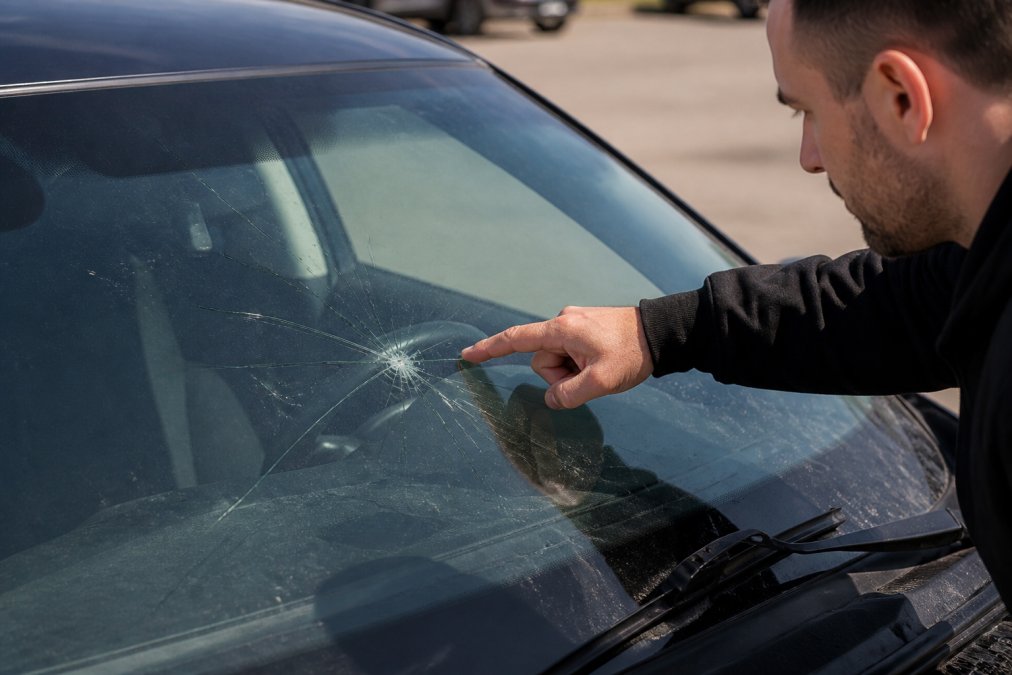
A bullseye chip is a circular impact with a cone-shaped break beneath the surface. A star break radiates short legs from a central point. Both are good candidates for resin injection when they measure under six inches across and sit at least a few inches from the edge of the glass.
Resin injection works by filling the void with a liquid acrylic that cures under UV light, restoring structural support and stopping crack propagation. The repair preserves the original factory seal, which matters more than most drivers realize.
When Replacement Is the Only Safe Option
Replacement is required when damage exceeds the six-inch rule, when a crack reaches the edge of the glass, or when the point of impact sits directly in the driver's line of sight. Cracks that touch the edge compromise windshield integrity because the edge is where the glass bonds to the vehicle frame.
How to Tell If Windshield Needs Replacement: 7 Warning Signs
Seven signs point to replacement rather than repair: damage over six inches, a crack touching the edge, damage in the driver's line of sight, a chip deeper than the inner glass layer, spiderwebbing, signs of improper installation, and any damage on a vehicle with ADAS cameras that requires recalibration. When two or more apply, replacement is the safer call.
Here is how to tell if windshield needs replacement in practice. Walk through each sign in order and note which ones match what you see.
Damage Size and Depth: From Bullseye Chip to Spreading Crack
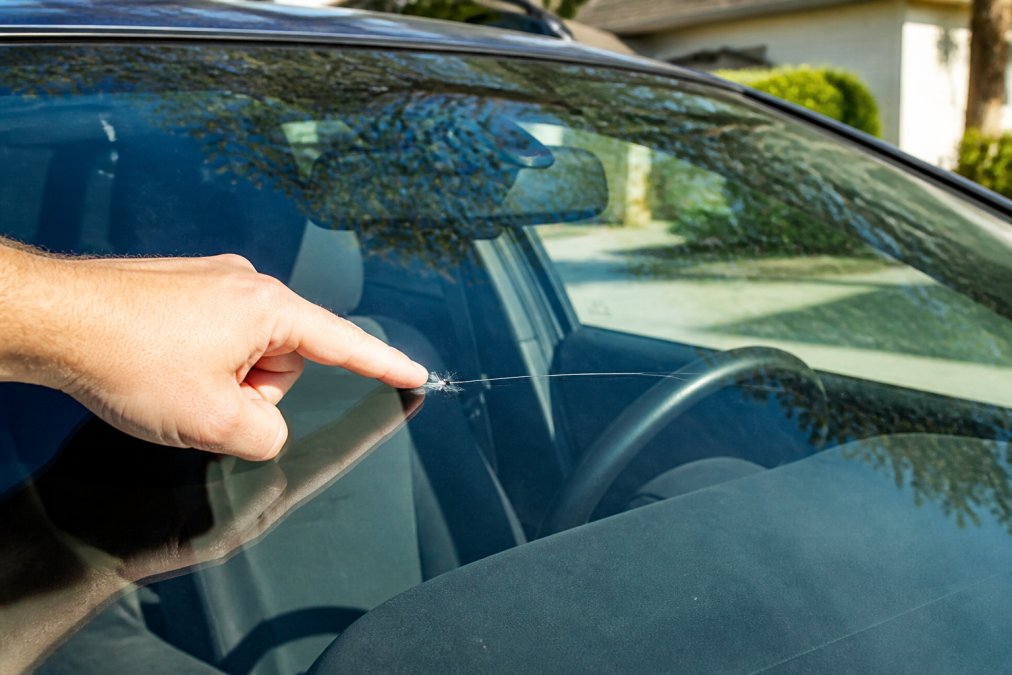
Size is the first filter. A quarter-sized bullseye is a straightforward repair. A crack longer than a dollar bill is not. Depth matters too: if the damage penetrates past the outer layer of laminated glass into the inner layer, resin cannot restore the bond, and the glass has lost structural support.
Location Matters: Driver Line of Sight and Edge-to-Edge Damage
Location is the second filter, and it overrides size. A small chip in the driver's line of sight is a replacement even if it measures under an inch, because any repair leaves a faint optical distortion. Edge-to-edge damage is the third filter: cracks that reach the perimeter spread quickly and cannot be stabilized.
Visual identification guide:
| What You See | Likely Type | Typical Action |
|---|---|---|
| Round impact, cone-shaped center | Bullseye chip | Repair if under 6 inches |
| Central point with radiating legs | Star break | Repair if away from edges |
| Web of fine cracks from one point | Spiderwebbing | Replacement |
| Single line running across glass | Stress crack | Replacement |
| Crack touching the frame edge | Edge-to-edge damage | Replacement |
| Pitting across the whole surface | Surface wear | Replacement if vision impaired |
Windshield Repair vs. Replacement Cost: What Drives the Price
Windshield repair vs. replacement cost comes down to four variables: whether the damage qualifies for resin injection, whether the vehicle has ADAS cameras requiring recalibration, how the work is billed to insurance, and where you live in the claims process relative to your deductible. Most guides stop at the first variable. The last two are where the real money decision lives.
What Actually Drives the Repair Price
A resin repair is priced on labor and material, not on the size of the glass. The technician drills into the impact point, mounts an injector, pulls a vacuum to remove trapped air and moisture, then pushes acrylic resin into the void and cures it under UV light. That is roughly 30 to 45 minutes of hands-on work. Because no new pane, urethane, or recalibration is involved, repair is almost always the smaller line item, often a fraction of replacement cost. The trade-off is cosmetic: a repaired chip leaves a faint blemish, which is why any damage in the driver's primary line of sight is disqualified from repair even when it is small.
What Actually Drives the Replacement Price
Replacement carries four cost layers competitors rarely separate:
- The glass itself. OEM glass, OEE (original equipment equivalent) glass, and aftermarket glass are priced differently, and the gap widens on vehicles with acoustic laminate, rain sensors, or heated wiper zones.
- Urethane adhesive and the cure period. The adhesive is a structural component, not a sealant. It needs a controlled cure before the vehicle is safe to drive.
- Molding and clips. Many windshields use one-time-use moldings that must be replaced, not reused.
- ADAS recalibration. On vehicles with a camera behind the glass, recalibration is a separate labor operation with its own equipment and time.
The Deductible Math: When to File and When to Pay Cash
This is the decision most drivers get wrong. Comprehensive coverage, not collision, is the coverage that typically pays for windshield damage, because glass breakage is usually treated as a non-collision loss. Two levers control what you actually pay:
- Your comprehensive deductible. If the replacement cost is at or below your deductible, filing a claim pays you nothing and still opens a claim on your policy history. In that case, paying cash is usually the cleaner move.
- State glass rules. Some states require insurers to waive the deductible for a repair (not a replacement) when the damage qualifies, as an incentive to fix small chips early rather than let them spread. Rules vary by state, so confirm your specific policy language before assuming a repair is free.
A common pattern: if the quote for replacement is only modestly above your deductible, the claim may still make sense because it caps your exposure. If the quote is well below your deductible, cash avoids a claim record. Repair, when it qualifies, almost always lands below the deductible threshold, which is exactly why acting early on a chip is the cheapest path.
Questions to Ask Any Shop Before You Commit
- Is the quote for OEM, OEE, or aftermarket glass, and does my lease or loan require a specific type?
- Is ADAS recalibration included, or billed separately?
- Is the molding and any one-time-use hardware included?
- What is the safe-drive time after installation, and does it change with today's temperature?
Getting those four answers in writing is how you compare quotes apples-to-apples instead of chasing the lowest headline number.
ADAS Camera Recalibration After Windshield Replacement
ADAS camera recalibration after windshield replacement is not optional on most modern vehicles. Lane-keeping assist, automatic emergency braking, and adaptive cruise control all rely on a camera mounted behind the glass (nhtsa.gov). When the windshield is replaced, the camera's aim shifts by fractions of a degree, and that is enough to throw off lane detection.
Advanced Driver Assistance Systems (ADAS) are the electronic safety features that use cameras, radar, and sensors to assist the driver. Recalibration is the process of realigning the camera to the manufacturer's specification after the glass is installed.
The two common methods are static recalibration, performed in a controlled bay with target boards, and dynamic recalibration, performed by driving the vehicle at specified speeds on a marked road. The correct method depends on your make and model. BL Auto Glass includes camera recalibration when the vehicle requires it, so the safety sensors are verified before you drive away.
How Long Does Windshield Replacement Take?
How long does windshield replacement take? Most mobile installations take about an hour of hands-on work, plus a urethane cure period before the vehicle should be driven. The cure time depends on the adhesive and ambient temperature, and it is the reason a technician will tell you to wait before hitting the highway.
What most guides miss is that the clock does not start when the technician arrives. It starts when the old glass is out and the frame is prepped. If recalibration is required, add time for the static or dynamic procedure. Same-day appointments are common with mobile service because the work happens at your home or office rather than in a shop queue.
When to Act Immediately: Safety Risks and Temperature Damage
Two situations demand same-day action: damage in the driver's line of sight, and any crack that has started to spread. Visibility obstruction is an immediate safety issue, and crack propagation rarely stops on its own. But the reason cracks spread, and the reason a chip that sat quietly for weeks suddenly runs, is temperature, and that mechanism is worth understanding because it tells you exactly when to stop waiting.
Why Temperature Turns a Chip into a Crack
A windshield is laminated glass: two layers of glass bonded to a plastic interlayer (polyvinyl butyral, or PVB). Glass and PVB expand and contract at different rates when heated and cooled (PubMed). A chip or star break is a void in that sandwich, a spot where the layers are no longer bonded. Every temperature cycle flexes the glass around that void, and the stress concentrates at the tip of the break. Over enough cycles, the tip advances. That is why a chip can look stable for weeks and then run across the windshield in a single cold morning.
The classic triggers are predictable:
- A cold snap followed by a warm afternoon. The glass warms faster at the edges than the center, and the differential stress opens the break.
- Defroster heat on a frozen windshield. Blasting hot air onto cold glass is one of the fastest ways to turn a chip into a crack.
- A hot car washed with cold water, or a cold car hit with hot water. Sudden thermal shock is the worst case.
- Direct summer sun on a dark dashboard. Interior heat radiates onto the inner glass layer and adds to the stress.
A break which has survived several temperature swings without growing is still not safe, it has simply not hit its trigger yet. The absence of visible growth is not evidence of stability.
The Immediate-Action Checklist
Act the same day if any of these are true:
- The damage is in the driver's primary line of sight. Any optical distortion there is a visibility hazard, regardless of size.
- A crack has reached the edge of the glass. The edge is where the windshield bonds to the frame; once the bond zone is compromised, the glass can fail suddenly.
- A crack is visibly growing, you can mark its end with a piece of tape and check it the next morning.
- The damage penetrates past the outer glass layer into the inner layer or the PVB interlayer. Resin cannot restore a bond that has failed through the full laminate.
- The vehicle has ADAS cameras and the damage sits anywhere near the camera's field of view, even if it looks minor.
What to Do While You Wait for the Appointment
- Do not slam doors. The pressure pulse flexes the glass and can advance a crack.
- Avoid extreme cabin temperatures. Park in shade in summer; in winter, warm the cabin gradually rather than hitting the defroster at full blast.
- Cover the chip with clear tape to keep out moisture and dirt. Contamination reduces the odds that a repair will hold.
- Do not use the damaged area as a handhold when closing the door or scraping ice.
Frequently Asked Questions
Is $500 a lot for a new windshield?
Windshield replacement costs vary widely based on your vehicle's make and model, the type of glass (laminated vs. tempered), and whether ADAS calibration is required. A $500 quote is not unusual for many modern vehicles with advanced driver assistance systems. However, if you have comprehensive insurance, your out-of-pocket cost may be much lower. In Florida, drivers with comprehensive coverage often qualify for $0 deductible replacement. Check with your insurer and a qualified glass technician for an exact quote.
How long will a cracked windshield last without replacing?
A cracked windshield can fail at any time, and there is no safe way to predict how long it will last. Temperature changes, road vibrations, and even closing a door can cause a small crack to spread rapidly. If the crack is longer than six inches or in the driver's line of sight, replacement is the only safe option. Even smaller cracks can compromise windshield integrity and structural support. Do not delay; schedule an inspection as soon as you notice damage.
Will my insurance go up if I claim for a windshield?
In most cases, filing a windshield claim does not increase your premium. Many insurers treat glass claims as comprehensive claims, which are often not surcharged. In Florida, comprehensive insurance covers windshield replacement, and you may qualify for $0 deductible. However, policies vary. Check your specific plan or ask your insurance provider. A professional glass technician can also help you understand your coverage before scheduling service.
Can a crack in the driver's line of sight be repaired?
No. Damage in the driver's line of sight, typically the area directly in front of the steering wheel, cannot be safely repaired. Even a small chip or crack in this zone can obstruct visibility and compromise the windshield's structural support. Federal safety standards require a clear view for the driver. If damage is in this area, replacement is mandatory. A qualified technician can confirm the exact boundaries of your line of sight.