
 how-to
How to Fix a Spreading Windshield Crack
Table of Contents
- Why Windshield Cracks Spread
- Immediate Steps to Prevent a Spreading Windshield Crack
- Windshield Repair Kit Instructions
- When to Replace vs Repair Windshield
- Windshield Crack Repair Cost and Insurance
- ADAS Camera Considerations After Windshield Damage
- When to Call a Professional
- Frequently Asked Questions
Last Updated: September 3, 2026
Why Windshield Cracks Spread
A spreading windshield crack is a structural failure in progress. The moment a chip or crack appears, forces push it wider. Temperature swings, road vibrations, and windshield wiper pressure all accelerate the spread. A small chip that seems manageable today can become unrepairable within days.
Temperature Fluctuation and Thermal Expansion
Temperature is a major culprit behind spreading windshield cracks. Glass expands when heated and contracts when cooled. A crack prevents uniform expansion, creating uneven stress at the fracture edges. During the day, the sun heats the outer surface faster than inner layers. The glass wants to expand, but the crack blocks it, creating tension. When evening arrives and temperature drops, the glass contracts unevenly. This thermal cycling acts like a tiny hammer, driving the crack deeper and wider over days and weeks.
Defroster settings amplify this problem. Blasting hot air onto a cold windshield creates extreme temperature differentials in seconds. The outer glass heats rapidly while the inner layer stays cold, turning a small chip into a spreading crack almost overnight. Parking in full sun, especially in warmer climates, subjects your glass to temperature swings of 40-50 degrees between morning and afternoon (peer-reviewed research).
Vibration and Impact Pressure
Every bump in the road transmits vibration through your vehicle's frame to the windshield. The glass flexes slightly with each vibration. For an intact windshield, this is harmless. For a cracked one, each flex opens and closes the fracture slightly, gradually working the crack wider. Highway driving creates continuous low-level vibration, a 45-minute commute exposes a cracked windshield to thousands of vibration cycles.
Windshield wiper pressure is surprisingly significant. Modern wipers apply considerable downward force, especially on high speed. If a crack is near the wiper blade's path, repeated pressure can drive the fracture forward with each cycle. Impact from flying debris can restart or accelerate an existing crack, sending new branches in different directions.
Immediate Steps to Prevent a Spreading Windshield Crack
The moment you notice a spreading windshield crack, stop the forces accelerating it. You can't reverse existing damage, but you can prevent it from worsening while arranging repair or replacement.
Stop using your defroster on high heat. This is the single most damaging thing you can do to a cracked windshield. Use low heat or vent setting instead.
Avoid car washes, especially high-pressure ones. Water pressure and vibration can accelerate spreading. Hand-wash if necessary, or skip washing until repair.
Park in shade whenever possible. Direct sunlight creates thermal expansion stress that drives cracks wider. A garage is ideal; under a tree is better than full sun.
Minimize highway driving. Local streets with lower speeds create less continuous vibration. If highway driving is unavoidable, keep speeds moderate.
Clear debris near the crack. Small pebbles or dirt can act as stress points. Gently brush away loose material without applying pressure directly to the crack.
Apply clear tape over the crack as a temporary barrier. This slows the spread by reducing vibration transmission and preventing water seepage. Use clear packing tape or painter's tape on both sides if accessible.
Avoid slamming doors. Impact vibration from hard door slams can propagate cracks. Close doors gently.
These steps are damage control, not permanent solutions. A spreading windshield crack requires professional repair or replacement, but these measures can buy time and prevent worsening while you arrange service.
Windshield Repair Kit Instructions
For small chips and minor cracks, a windshield repair kit using clear epoxy resin can work. The process is straightforward, but precision matters.
Preparing the Damage Site
Repair kits work best on chips smaller than a quarter and cracks shorter than 12 inches. If your spreading windshield crack is longer or more complex, skip to professional repair.
Clean the damaged area thoroughly with rubbing alcohol and a lint-free cloth. Let it dry completely, moisture inside the crack prevents the resin from bonding properly. Inspect for glass debris and use a small tool or compressed air to dislodge any loose pieces gently. Some kits include a drill bit for creating a small hole at the crack's end to relieve stress; follow the kit's instructions on this step.
Applying the Resin and Curing
Inject the clear epoxy resin slowly into the chip or crack, filling it completely from one end to the other. Overfill slightly; excess resin is easier to remove than unfilled gaps.
If your kit includes a curing strip, apply it and leave it in place for the specified time, typically 24-48 hours. If it includes a UV light, follow the recommended exposure time, usually 10-15 minutes. During curing, keep the windshield out of direct sunlight and avoid temperature extremes. Don't run the defroster on high heat.
After curing, remove the curing strip and use a plastic scraper to remove excess hardened resin. The result should be a barely visible clear repair. However, DIY resin repair has limited structural strength and is a temporary fix, not permanent.
When to Replace vs Repair Windshield
Not every crack can be repaired. Understanding the difference between repairable and non-repairable damage is critical.
Identifying Repairable vs Non-Repairable Damage
A repairable spreading windshield crack must be smaller than 12 inches long, with multiple cracks separated by at least 12 inches (nhtsa.gov). The crack cannot be in the driver's direct line of sight. Chips smaller than a quarter and simple radial cracks (spreading outward from a central point like a star break) are generally repairable.
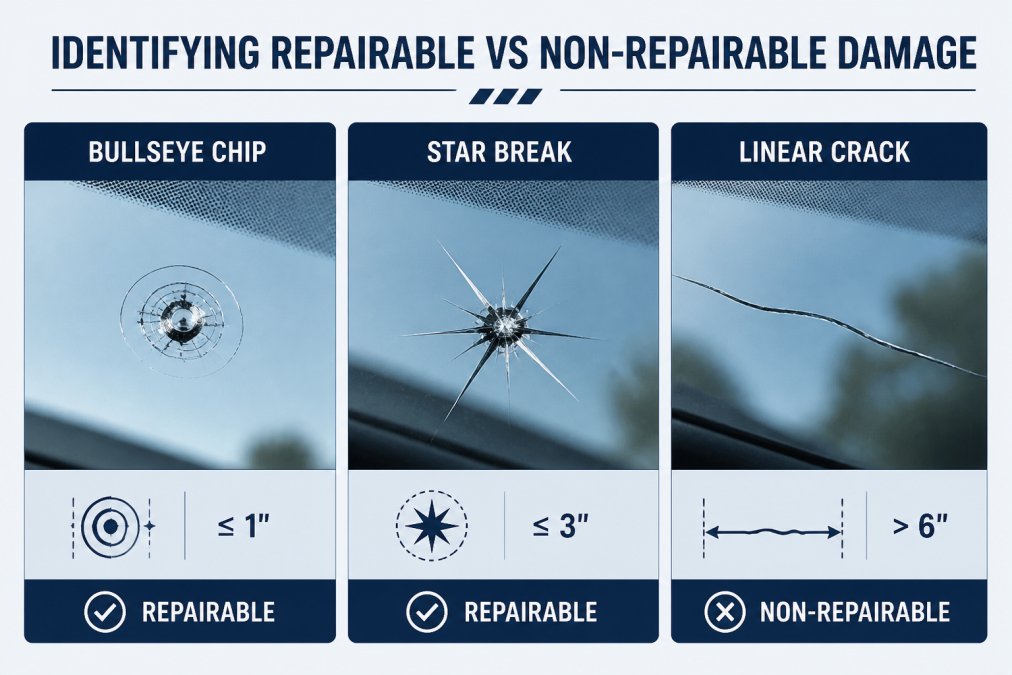
Non-repairable damage includes cracks longer than 12 inches, multiple cracks too close together, damage in the driver's line of sight, and lamination failure (where windshield layers are separating). A spreading windshield crack that has branched into multiple directions or obstructs visibility is almost always non-repairable.
Location matters significantly. Damage near edges, frame, or corners is harder to repair and more likely to fail. Damage near sensors or cameras in modern vehicles also complicates repair. If the crack has separated the two glass layers (visible as a white or cloudy line), repair is impossible.
Long-Term Durability: DIY Resin vs Professional Repair
A DIY resin repair might last months or years under ideal conditions, but success depends on damage size and location, kit quality, and application skill. Professional windshield repair uses higher-grade resins and specialized equipment that cure more completely, typically lasting longer than DIY repairs.
However, even professional resin repair is not permanent for a spreading windshield crack. The repaired area is always weaker than original glass. If the crack was caused by thermal stress or vibration, those forces remain. Windshield replacement is the only permanent solution, restoring full structural integrity.
Windshield Crack Repair Cost and Insurance
Most comprehensive auto insurance policies cover windshield damage, though coverage depends on your specific policy. Some policies include glass coverage with a deductible; others have separate glass coverage with lower or zero deductible.
Under Florida law, if you have comprehensive coverage, your insurer must offer glass coverage with a zero deductible option (floir.com). Many insurers in the state have made zero-deductible glass coverage standard on comprehensive policies. To use insurance for a spreading windshield crack, file a claim with your insurer. They'll direct you to an in-network repair shop or allow you to choose your own. In-network providers typically bill the insurance company directly, and you pay nothing if your coverage includes zero deductible.
For those without comprehensive insurance, repair costs vary. A simple chip repair might cost less than your deductible, making out-of-pocket payment cheaper. Full windshield replacement typically costs more.
ADAS Camera Considerations After Windshield Damage
Modern vehicles have advanced driver assistance systems relying on cameras mounted behind the windshield. Windshield damage can affect these systems. When a windshield is replaced, camera calibration must be reset, as the camera's view changes slightly with each new installation. If calibration isn't performed, ADAS systems may not function correctly.
Some windshield repair shops include camera recalibration as part of their service; others charge extra. Confirm that recalibration is included in your quote. Recalibration requires specialized equipment and trained technicians, taking 30-60 minutes depending on the system. Ignoring camera recalibration after windshield replacement is a safety risk.
When to Call a Professional
If your spreading windshield crack is longer than 12 inches, located in the driver's line of sight, or shows signs of lamination failure, replacement is necessary. Professional repair also makes sense if damage is in a critical location near the frame, sensors, or structural areas.
Professional service offers convenience. Many windshield companies offer mobile service, a technician comes to your location. Same-day appointments are often available. Professional service typically includes a warranty. BL Auto Glass, for example, provides a lifetime warranty on windshield replacements. Insurance claims are also simpler with professional service; established shops handle the paperwork.
A spreading windshield crack demands attention. The forces driving the spread, temperature, vibration, and impact, are constant. The longer you wait, the more likely the damage becomes unrepairable. Small chips and short cracks can sometimes be handled with a repair kit, but larger or more complex damage requires professional replacement.
At BL Auto Glass, we handle windshield repair and replacement with mobile service that comes to you. Our team manages your insurance claim from start to finish, often resulting in zero out-of-pocket cost with comprehensive coverage. We include camera recalibration for vehicles with ADAS systems, ensuring your safety features work correctly after repair. Book an appointment today and get your windshield fixed before a small crack becomes a costly problem.
| Damage Type | Repairable | Typical Solution | Timeline |
|---|---|---|---|
| Small chip (under 1") | Yes | DIY kit or professional repair | 24-48 hours |
| Star break | Yes | Professional repair or replacement | 1-2 days |
| Spreading crack (6-12") | Maybe | Professional assessment required | 1-3 days |
| Long crack (over 12") | No | Full replacement | Same-day or next day |
| Lamination failure | No | Full replacement | Same-day or next day |
| Damage in driver's line of sight | No | Full replacement | Same-day or next day |
Frequently Asked Questions
What can I put on my windshield to stop a crack from spreading?
Clear tape is a temporary measure that can slow crack propagation by reducing vibration, but it does not stop the spread permanently. Windshield repair resin, applied through a DIY kit or professional service, fills the damage and hardens to stabilize the crack. Clear epoxy products offer better adhesion than tape. For lasting results, professional glass technician repair using UV-cured resin is most effective, especially for stress fractures that continue to expand due to temperature fluctuation and thermal expansion.
Does temperature change cause windshield cracks to spread?
Yes. Temperature fluctuation causes thermal expansion and contraction in laminated glass. When your defroster runs on high heat or you park in direct sunlight, the glass expands; cold mornings cause contraction. This stress at the impact point and along existing crack lines accelerates crack propagation. Avoiding extreme temperature changes, parking in shade, and using moderate defroster settings can slow spreading. Professional repair seals the crack to reduce the effect of temperature changes.
When to replace vs repair windshield damage, what's the difference?
Repair is viable for small chips and short cracks (typically under 12 inches) away from the driver's line of sight and edges. Replacement is necessary for cracks longer than 12 inches, damage in the critical driver's vision area, cracks affecting structural integrity, or damage near the adhesive seal. Long-term durability of professional resin repair exceeds DIY kits significantly. If the crack is spreading rapidly or the damage compromises visibility or safety, replacement is the safer choice and often required by law for vehicle compliance.
How much does windshield crack repair cost?
Repair costs vary based on damage size, location, and whether you use DIY kits or professional service. Many vehicle owners with comprehensive insurance pay $0 deductible for repairs under certain state laws. Without insurance, pricing depends on the repair method and technician rates. For current pricing and a quote tailored to your damage, contact a local glass technician or your insurance provider. Professional mobile repair typically costs less than full replacement.
This article was written using GrandRanker