
 how-to
Does Insurance Cover Windshield Chip Repair? A 2026 Guide
Table of Contents
- Does Your Auto Insurance Cover Windshield Chip Repair?
- Comprehensive Coverage vs. Liability: What Your Policy Says About Glass
- Understanding Your Windshield Repair Deductible
- Windshield Chip Repair Cost vs. Replacement: The Financial Case
- Filing an Auto Glass Claim: A Step-by-Step Process
- The Hidden Cost of Modern Windshields: ADAS Recalibration
- OEM vs. Aftermarket Glass: Does Your Policy Care?
- Will Filing a Chip Claim Raise Your Insurance Premium?
- Frequently Asked Questions
Last Updated: September 8, 2026
Does Your Auto Insurance Cover Windshield Chip Repair?
The short answer is yes, but only if you carry comprehensive coverage. A rock chip or small crack is almost always classified as a comprehensive claim, not a collision claim, so liability-only policies leave you paying for windshield chip repair out of pocket. At BL Auto Glass, we handle insurance claims daily across Central Florida, and a common surprise is drivers discovering their deductible applies when they thought glass was free.
Understanding your coverage before you need it saves money and frustration, since the reality depends on your policy language, state regulations, and whether you have a glass waiver endorsement.
Comprehensive Coverage vs. Liability: What Your Policy Says About Glass
Comprehensive coverage pays for damage not caused by a collision, including theft, vandalism, weather events, and falling objects. A cracked windshield from a highway rock chip falls squarely into this category. Liability insurance only covers damage you cause to other vehicles and does nothing for your own glass.
Your policy's comprehensive deductible typically applies to glass claims, just as it would to any other covered loss. However, many insurers offer a separate glass endorsement that waives the deductible entirely for windshield repair and replacement. According to [the Insurance Information Institute's guide to auto glass(https://blautoglass.com/blog/oem-vs-aftermarket-auto-glass.html) coverage | iii.org], this endorsement is often inexpensive to add and can save you hundreds of dollars when a replacement becomes necessary.
The Zero-Deductible Glass Waiver Explained
A zero-deductible glass waiver is an optional endorsement that removes your financial responsibility for windshield repair and replacement claims. Instead of paying your standard comprehensive deductible, which often ranges from $250 to $1,000, you pay nothing when your glass needs attention. In Florida, this waiver is particularly valuable because state law requires insurers to waive deductibles for windshield repair when the damage can be repaired without replacement.
Florida Statute 627.7288 mandates that insurers cannot impose a deductible for windshield repair services, provided the repair is performed by a qualified technician and the damage is repairable. This means a small chip or star break that can be filled with resin rather than requiring a full replacement typically costs you nothing, regardless of your deductible amount.
Understanding Your Windshield Repair Deductible
Your windshield repair deductible is the amount you agree to pay before your insurance coverage kicks in for a glass claim. If your comprehensive deductible is $500 and your windshield repair costs $150, filing a claim may not make financial sense, since you would pay the full $500 deductible and receive no reimbursement.
But the real-world math is more nuanced than a simple cost comparison. Here is what to consider before deciding whether to file:
The Deductible Threshold Calculation
Most policyholders pay for small chip repairs out of pocket when the cost falls below their deductible. The smarter approach is to compare the repair estimate against your deductible amount before deciding whether to file a claim at all.
A common rule suggests that if the repair cost is less than half your deductible, paying out of pocket might be more economical. If it is close to or exceeds your deductible, filing the claim could be beneficial. For example, with a $500 deductible and a $450 replacement bill, filing might make sense because you would pay $50 more than the out-of-pocket cost. With a $100 chip repair and a $500 deductible, filing could cost $400 more than just paying the shop directly.
State-Specific Deductible Rules That Change the Math
Your state's insurance regulations can override your policy's deductible language entirely. The most significant example is Florida Statute 627.7288, which mandates that insurers cannot impose a deductible for windshield repair services when the damage can be repaired without replacement.
Other states have similar but narrower protections. In Kentucky, insurers must offer a $0 deductible for windshield repair (not replacement) as an optional endorsement. In South Carolina, insurers must offer a glass deductible waiver for full coverage policies, though it typically applies only to repair. In Arizona, Connecticut, and Massachusetts, insurers must offer a zero-deductible glass endorsement, but you must affirmatively elect it.
The Glass Endorsement vs. Standard Comprehensive Deductible
Your policy's comprehensive deductible typically applies to glass claims, just as it would to any other covered loss. However, many insurers offer a separate glass endorsement that waives the deductible entirely for windshield repair and replacement. According to the Insurance Information Institute's guide to auto glass coverage, this endorsement is often inexpensive to add and can save you hundreds of dollars when a replacement becomes necessary.
Glass endorsements come in two common forms:
- Zero-deductible glass replacement - waives your deductible for both repair and full replacement. This is the most valuable option and typically adds $10 to $30 per year to your premium.
- Repair-only waiver - waives the deductible only when the damage can be repaired rather than requiring replacement. This is common in states like Florida and Kentucky where the law mandates it.
What Happens When You File a Below-Deductible Claim
A frequent misconception is that filing a claim below your deductible is harmless because you receive no payout. When you file any comprehensive claim, your insurer logs it in your claims history, regardless of whether you receive a check. Multiple no-payout claims can still trigger a rate review or non-renewal notice, especially if you file more than two claims in a three-year period.
How to Check Your Deductible Before You Need It
Your deductible amount is listed on your declarations page, not buried in your policy booklet. Look for the line labeled "Comprehensive" under your coverage summary. If you see a separate line for "Glass" or "Windshield," a glass endorsement is already active. If not, call your agent and ask whether adding a glass waiver is available in your state and what it would cost.
For drivers with newer vehicles equipped with advanced driver assistance systems, the deductible math changes further. A full windshield replacement on a modern vehicle can easily exceed $1,000 before recalibration costs, which means even a $1,000 comprehensive deductible may still result in a payout. In that scenario, filing the claim is almost always the right financial move.
Windshield Chip Repair Cost vs. Replacement: The Financial Case
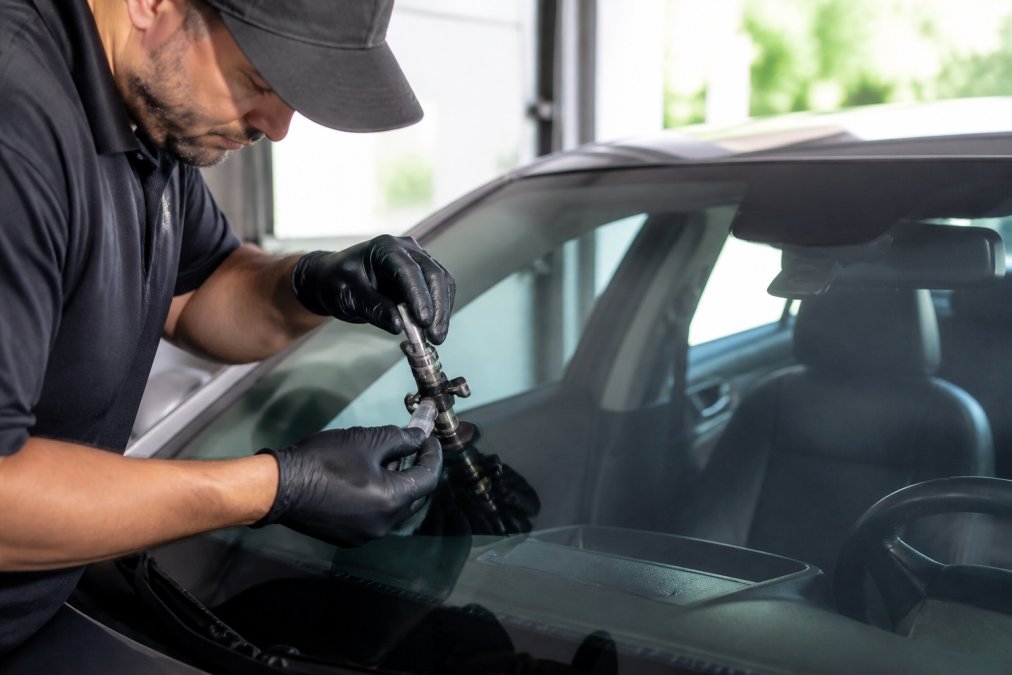
Acting quickly on a small chip can be a smart financial decision as a vehicle owner. Windshield chip repair cost is typically a fraction of what you will pay for a full replacement, and most insurance policies encourage repair over replacement because it saves them money too. When a chip is left untreated, temperature changes, road vibration, and moisture can cause crack propagation that spreads the damage across the entire windshield.
Repairing a chip preserves the original factory seal and avoids the labor costs associated with replacement. It also takes significantly less time, often under an hour, whereas replacement requires removing the old glass, preparing the frame, installing the new windshield, and allowing adhesive to cure. If your state mandates a zero-deductible repair benefit, the financial case becomes even clearer: you pay nothing, and you keep your original windshield intact.
Filing an Auto Glass Claim: A Step-by-Step Process
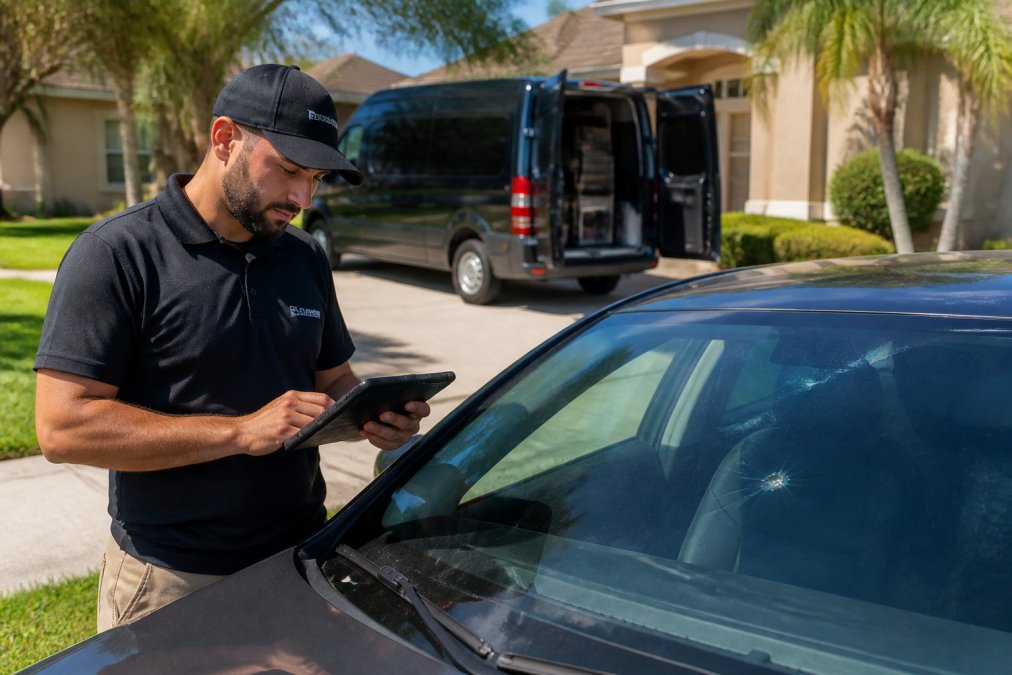
Filing an auto glass claim does not have to be complicated, but the process requires attention to detail to avoid unexpected out-of-pocket expenses. Follow these steps:
- Contact your insurance provider to verify your comprehensive coverage and confirm whether a glass waiver or zero-deductible repair benefit applies to your policy.
- Choose a repair shop that handles insurance claims directly. A reputable shop will communicate with your insurer on your behalf and confirm coverage before beginning any work.
- Provide your policy number and claim details to the shop so they can verify your deductible and coverage limits.
- Schedule the service at your home, workplace, or the shop's location. Many providers offer mobile service for added convenience.
- Review the paperwork before authorizing work to ensure the claim is approved and no hidden fees remain your responsibility.
Repair vs. Replacement: What Your Insurer Decides
Your insurer's decision between repair and replacement often hinges on the size, location, and type of damage. Chips smaller than a quarter, cracks shorter than three inches, and damage located away from the driver's line of sight are frequently repairable. Larger damage, cracks at the edge of the windshield, or damage directly in front of the driver typically requires full replacement.
Insurance adjusters follow industry guidelines that prioritize repair when possible because it costs less and preserves the original glass. However, modern windshields often contain advanced driver assistance systems, and a repair that compromises sensor alignment can create safety risks. Your insurer may require a post-repair calibration check to ensure all safety features continue functioning correctly.
The Hidden Cost of Modern Windshields: ADAS Recalibration
Modern vehicles increasingly rely on cameras and sensors mounted to the windshield for features like lane-keeping assist, automatic emergency braking, and adaptive cruise control. When a windshield is replaced, those components must be removed and reinstalled, which means the entire system requires recalibration to function correctly. ADAS recalibration is not optional, and it adds a significant cost to any replacement.
Many drivers are surprised to learn that recalibration can rival the cost of the windshield itself. The process requires specialized equipment and trained technicians to align the camera to the manufacturer's precise specifications. If your vehicle has these features, confirm that your insurance claim includes recalibration coverage and that your repair shop has the capability to perform it. A replacement without proper recalibration can leave safety systems misaligned and compromise your vehicle's protection.
OEM vs. Aftermarket Glass: Does Your Policy Care?
Your insurance policy may specify whether your replacement uses original equipment manufacturer (OEM) glass or aftermarket alternatives. OEM glass is produced by the same manufacturer that supplied your vehicle's original windshield, while aftermarket glass comes from third-party producers. Aftermarket glass is often less expensive, but quality and fit can vary significantly between manufacturers.
Some insurance policies explicitly cover OEM glass, while others default to aftermarket unless you request otherwise and pay the difference. According to the National Windshield Repair Division's standards on glass quality, aftermarket glass must meet federal safety standards, but fit and optical clarity can differ. If your vehicle has ADAS features, OEM glass often provides more reliable sensor performance because it matches the original specifications precisely.
Will Filing a Chip Claim Raise Your Insurance Premium?
A single windshield chip claim is unlikely to raise your insurance premium, but the answer depends on your insurer's claims history policies. Comprehensive claims, including glass damage, are generally viewed as less risky than collision or liability claims because they are often outside your control. However, filing multiple claims within a short period can flag you as a higher-risk policyholder.
The National Association of Insurance Commissioners' consumer guidance on claims notes that insurers evaluate claim frequency when setting rates. If you have a zero-deductible glass waiver, your insurer expects glass claims and typically does not penalize them. Without that endorsement, weigh the benefit of filing a claim against the potential for a modest rate increase at renewal.
What Insurers Actually Look At: Claim Frequency, Not Claim Type
Insurance underwriting systems do not treat every glass claim identically. The key variable is claim frequency relative to your policy tenure. A common industry pattern suggests that one comprehensive claim every three to five years may have minimal impact on your rate. However, two or more claims within a 12-month period, even small glass repairs, can trigger a surcharge or move you into a higher-risk tier at renewal.
Most major carriers use a claims-based scoring model similar to the Comprehensive Loss Underwriting Exchange (CLUE) database, which tracks every claim you file, including no-payout claims. Insurers pull your CLUE report at renewal and use it to adjust your premium. A single $150 chip repair that you filed when your deductible was $500 still appears on that report, even though you received no reimbursement.
State-Specific Rate Protections for Glass Claims
Some states prohibit insurers from surcharging for glass claims specifically. In California, Proposition 103 restricts insurers from raising rates based on claims that were not your fault, and glass damage from road debris is generally classified as a not-at-fault comprehensive loss. In New York, insurers cannot impose a surcharge for comprehensive claims under $2,000, which covers virtually all windshield repairs and most replacements. In Texas, a single comprehensive claim cannot be the sole reason for a rate increase, though two or more claims can be.
In Florida, the same statute that mandates zero-deductible windshield repair also provides rate protection. Insurers cannot impose a surcharge on your premium solely because you filed a windshield repair claim under the zero-deductible provision. However, that protection does not extend to full windshield replacement claims, which count as standard comprehensive losses.
The Zero-Deductible Waiver Exception
If you carry a zero-deductible glass waiver, your insurer has already priced that coverage into your premium. Glass claims under that endorsement are expected losses, not unexpected risks. Most carriers do not penalize policyholders for using a benefit they paid for. The calculus changes only if you file multiple glass claims in consecutive years, which can prompt your insurer to non-renew the endorsement or raise its cost at renewal.
The Hidden Risk: Multiple Small Claims and High-Risk Status
A content gap most insurance guides miss is the impact of frequent small glass claims on your overall risk profile. Insurers use a metric called the claim frequency ratio, the number of claims you file divided by the number of years you have been with the carrier. A ratio above 0.5 (one claim every two years) is a red flag in most underwriting systems. A ratio above 1.0 (one claim per year) can lead to non-renewal, regardless of the claim size.
This means a driver who files a $100 chip repair claim every year for three years may be more likely to be dropped than a driver who files one $1,200 replacement claim in the same period. The practical takeaway: if your state does not mandate zero-deductible repair, pay for small chip repairs out of pocket and reserve your claims for replacements or damage exceeding your deductible.
How to Get a Definitive Answer From Your Insurer
The only way to know whether a specific claim will raise your premium is to ask your insurer directly before filing. Phrase the question carefully: "If I file a comprehensive glass claim today, will my premium increase at my next renewal?" Get the answer in writing via email or your insurer's secure messaging portal. Verbal assurances from a call center representative are not binding, but written responses create a paper trail you can use if your rate changes unexpectedly.
Some insurers offer a claim forgiveness feature that waives the first comprehensive claim's impact on your rate. This is often included with accident forgiveness riders or available as a separate endorsement. Check your policy documents for the phrase "claim forgiveness" or "first-claim waiver" before deciding whether to file.
Frequently Asked Questions
Will my insurance go up if I claim a chip in my windshield?
In most cases, filing a glass claim will not raise your premium, especially if you have a separate glass rider or a zero-deductible windshield provision. Insurers typically distinguish between comprehensive claims, like rock chips, and at-fault accidents. However, filing multiple glass claims in a short period could flag your account for review and potentially impact your rates. One chip repair is generally safe, but it is wise to check with your agent about your specific carrier's claims history policy.
How much does windshield chip repair cost without insurance?
The windshield chip repair cost without insurance typically ranges from $50 to $150, depending on the severity and location of the damage. This is significantly less than a full windshield replacement, which can cost several hundred dollars or more, especially for vehicles with advanced driver-assistance systems (ADAS). Because it is cheaper for the insurer to pay for a repair than a replacement, most policies encourage chip repair by waiving the deductible.
How do I get a windshield chip covered by insurance?
Start by contacting your insurance provider to confirm you carry comprehensive coverage. Then, call a reputable auto glass shop like BL Auto Glass. We simplify the process by handling your insurance claims from start to finish. Under Florida law, your insurer must waive your deductible for windshield repair, meaning you pay nothing out of pocket for a chip fix if you have comprehensive coverage.
Is it worth going through insurance to replace a windshield?
It depends on your deductible. If your comprehensive deductible is $500 and the replacement costs $400, it makes no sense to file a claim. However, if you have a zero-deductible glass waiver, which is common in Florida, your replacement will be fully covered. You should also consider the impact of multiple claims on your policy. For larger cracks that compromise driver visibility and structural integrity, using your insurance is usually the right financial move.