
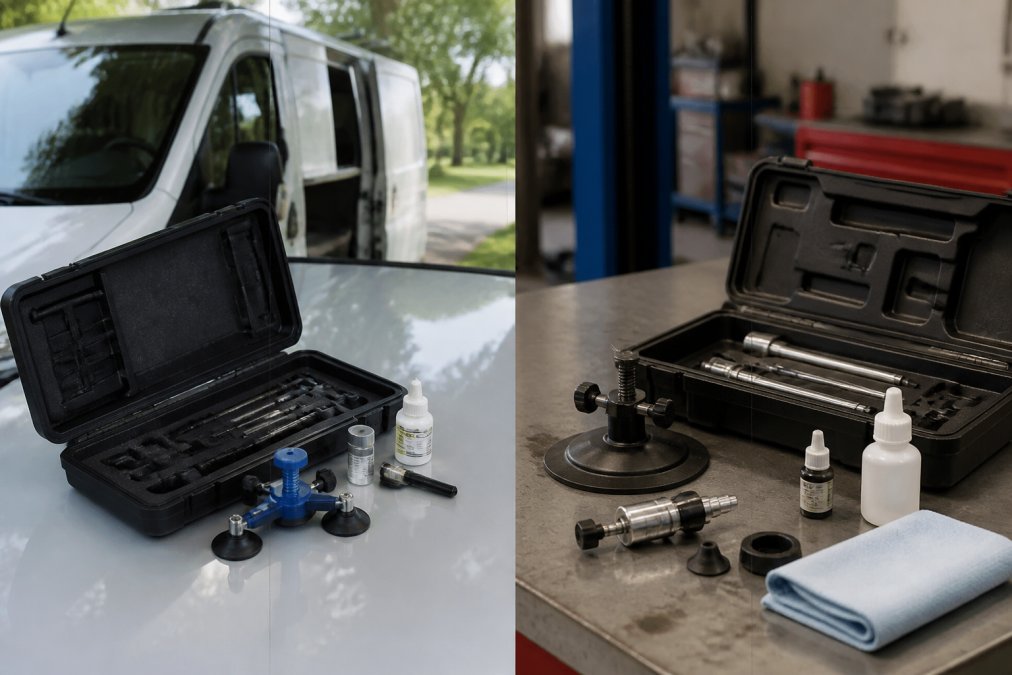
 comparison
Mobile Windshield Repair vs Shop Service: Which Is Safer?
Table of Contents
- Mobile Windshield Repair vs Shop Service: Quick Comparison
- Quality and Safety: Can a Mobile Technician Match a Shop?
- Windshield Recalibration Requirements: The Mobile Catch
- Mobile Windshield Replacement Cost vs Shop: What You Pay For
- How to Prepare Car for Mobile Windshield Replacement
- Weather, Curing Time, and Your Insurance Claim
- The Verdict: Choosing the Right Service for Your Car
- Frequently Asked Questions
Last Updated: September 7, 2026
Mobile Windshield Repair vs Shop Service: Quick Comparison
The debate between mobile windshield repair vs shop service comes down to a single question: does convenience compromise safety? For a simple chip or crack away from the sensors, a qualified mobile technician delivers results that match any shop. But for modern vehicles with advanced driver assistance systems, the answer gets more complicated.
At BL Auto Glass, we offer both mobile and shop-based replacements across Central Florida, and each approach has a distinct place. Mobile windshield repair brings the service to your driveway or office parking lot. Shop service offers a controlled environment where temperature and humidity are managed precisely.
Below, we break down the technical differences, calibration requirements, and which option is genuinely safer for your vehicle.
Winner: Depends on your vehicle. Choose mobile windshield repair for standard replacements without ADAS sensors or when convenience is critical. Choose a shop when your car requires camera recalibration or when weather conditions threaten proper adhesive curing.
Quality and Safety: Can a Mobile Technician Match a Shop?
A skilled mobile technician can match shop quality for standard replacements, provided they follow the same safety standards and use equivalent materials. The windshield is a structural component contributing to roof crush protection and proper airbag deployment (nhtsa.gov).
The critical difference comes down to environmental control. Shops maintain consistent temperatures and humidity levels that allow urethane adhesives to cure properly. Mobile service vehicles, by contrast, are exposed to outdoor conditions. Rain, extreme heat, or cold can compromise the adhesive bond if the technician doesn't account for it.
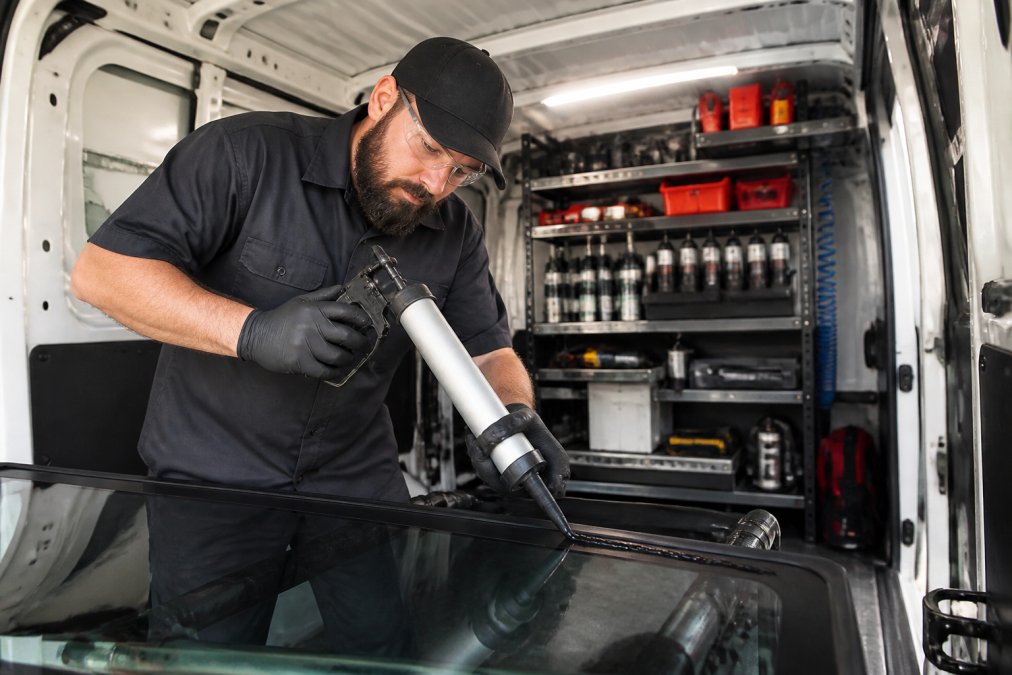
Modern windshields use one-part urethane adhesives that cure through moisture in the air. High humidity accelerates curing, while dry, cold conditions slow it dramatically. A professional mobile technician monitors these factors and adjusts drive-away times accordingly.
Windshield Recalibration Requirements: The Mobile Catch
If your vehicle has lane-keeping assist, adaptive cruise control, automatic emergency braking, or forward collision warning, your replacement is not complete after installation. These systems rely on cameras and sensors mounted to the glass, which must be recalibrated to align correctly with the road.
Most vehicles built after 2017 with ADAS features need either static or dynamic calibration after glass replacement. Static calibration happens in a controlled shop environment with specific targets at precise distances. Dynamic calibration requires driving under specific conditions while the system learns its parameters.
This is where mobile windshield repair hits a genuine limitation. Many mobile technicians can replace the glass but lack the specialized calibration equipment needed for proper sensor alignment. Some perform a basic static calibration on-site, but accuracy depends on finding a perfectly level surface with adequate space, which isn't always available at a customer's home or workplace.
If your vehicle has a camera module attached to the windshield, confirm that your provider includes recalibration as part of the replacement. At BL Auto Glass, we include professional camera recalibration when needed. Some shops charge separately, so clarify upfront.
Mobile Windshield Replacement Cost vs Shop: What You Pay For
The price gap between mobile windshield replacement and shop service is often smaller than drivers expect. The real financial driver is your insurance policy's claim structure, your deductible, and whether the provider is in-network with your carrier.
The Line-Item Reality
A typical replacement quote breaks down into four components: the glass, the adhesive and trim kit, the technician's labor, and, if your vehicle has a camera module, the recalibration fee. Mobile service adds a travel or dispatch fee, usually $25 to $75, which is why a mobile quote can run 10% to 15% higher than the same job in a shop (iii.org).
But that comparison only holds when you're paying out of pocket. When insurance is involved, the structure changes completely.
How Insurance Actually Dictates the Choice
Most drivers assume their comprehensive coverage treats mobile and shop service identically. That assumption is often wrong.
- Preferred provider networks. Many insurers, including major national carriers, maintain a list of approved glass shops and mobile technicians. If you use an out-of-network provider, the insurer may cover the claim but apply a higher deductible or reimburse you at a lower rate, leaving you with a balance bill. Before scheduling, call the number on your insurance card and ask: "Is this provider in-network for glass claims?"
- Deductible waiver rules. In many states, insurers are required to waive the comprehensive deductible for windshield repair (chip filling), but replacement is treated differently. Some states mandate a $0 deductible for replacement; others allow the insurer to apply the full comprehensive deductible. The distinction between "repair" and "replacement" in your policy's language is critical, and it's a distinction many drivers never read.
- Claims handling fees. Some mobile providers add an administrative fee for filing the claim on your behalf, typically $15 to $30. Shops that handle high volumes with insurers often absorb this cost. Ask upfront whether the quote is the final price or whether a claims-processing fee will appear later.
The Hidden Cost of a Denied or Reduced Claim
A common pattern: a driver schedules a mobile replacement, the technician arrives, and mid-job discovers a rain-sensing windshield or heated glass element not noted on the initial estimate. The insurer approved a base windshield, not the OEM-equivalent with the sensor package. The result is a supplemental claim, a delay, and often an out-of-pocket difference of $150 to $400.
Before you commit, verify with your insurer that the claim covers the exact glass part number your vehicle requires. A shop with a parts department can often resolve this discrepancy on the spot; a mobile technician may need to reschedule after ordering the correct glass.
What to Ask Before You Commit
To avoid surprises, ask these three questions before any work begins:
- "Is my deductible waived for this replacement under my state's laws and my policy's terms?"
- "Is this provider in-network with my insurance company, and will I receive a balance bill if I proceed?"
- "Does the quote include recalibration, or is that a separate claim line item?"
The cheapest option on paper is not always the cheapest after insurance adjustments. A provider that handles claims directly and confirms coverage before dispatching a technician saves you both money and administrative headache.
| Factor | Mobile Service | Shop Service |
|---|---|---|
| Base labor rate | Slightly higher (travel fee added) | Lower per-job rate |
| Insurance claim handling | Varies by provider; confirm in-network status | Often streamlined with insurer contracts |
| Deductible impact | Same as shop if in-network | Same as mobile if in-network |
| Supplemental claim risk | Higher if vehicle specs are misidentified | Lower due to on-site parts verification |
| Best for | Out-of-pocket standard replacements, $0 deductible policies | Complex claims, ADAS vehicles, uncertain coverage |
Pricing depends on your specific vehicle, glass type, and location. Contact your provider for an exact quote based on your damage assessment, and call your insurer first to confirm your coverage terms.
How to Prepare Car for Mobile Windshield Replacement
Knowing how to prepare car for mobile windshield replacement ensures the technician can work efficiently and safely. The preparation takes about ten minutes and prevents common delays.
First, clear the area around your vehicle. The technician needs space to position their service vehicle and access both sides of your windshield. Move other cars from the driveway if possible, and remove items from the front seats, dashboard, and rearview mirror area.
Second, disable your vehicle's alarm system. Many modern cars have motion sensors that trigger when the technician works inside the cabin. You can usually disable this through the vehicle settings or valet key mode in your owner's manual.
Third, remove toll transponders, dash cameras, and parking permits from the windshield area. These items can interfere with access and may be damaged during removal. Also remove fragile items from the trunk if the technician needs rear access for calibration.
Finally, ensure the vehicle is parked on a level surface. This matters for both adhesive application and any static calibration. On an incline, the glass may not seat properly and calibration targets will be misaligned.
Weather, Curing Time, and Your Insurance Claim
The urethane adhesive that bonds your windshield to the vehicle frame is a one-part moisture-curing polymer. It doesn't dry, it chemically reacts with ambient humidity to cross-link and gain structural strength. That reaction rate is temperature- and humidity-dependent, meaning the same adhesive can require 1 hour to reach safe drive-away strength in a Florida summer and 8 hours or more in a dry, cold winter day.
The Drive-Away Time Mechanism
Windshield adhesives are rated by the manufacturer for "drive-away time", the minimum time after installation before the glass can withstand normal driving forces without shifting. Two factors determine this window:
- Temperature. Most one-part urethanes cure optimally between 65°F and 95°F. Below 50°F, the chemical reaction slows dramatically. At 32°F, some adhesives may take 24 hours or longer to reach even 50% of their final strength.
- Relative humidity. The curing reaction consumes water vapor from the air. At 40% relative humidity or lower, common in heated indoor spaces during winter, curing slows. At 60% to 80% humidity, curing accelerates. Ironically, a rainy day is better for adhesive cure than a dry, sunny one, provided the rain doesn't contact the uncured adhesive seam.
A professional technician uses a dew-point chart or cure-time table to calculate the safe drive-away window for the exact conditions at installation. If conditions fall outside the recommended range, the technician should extend the drive-away time significantly or recommend a shop environment.
Why Mobile Service Faces a Structural Challenge
A shop's curing bay is typically maintained at 70°F to 80°F with controlled humidity, allowing predictable cure year-round. A mobile technician works in your driveway or parking lot, where cabin temperature and ambient conditions at the moment of installation determine the cure rate, and those conditions can change rapidly.
If rain is forecast within the drive-away window, the risk isn't just cosmetic. Water intrusion into the uncured adhesive seam can create voids, weaken the bond, and lead to wind noise, leaks, or, in a collision, windshield ejection. A reputable mobile technician will reschedule or recommend a shop visit when precipitation is imminent.
Vehicle-Specific Constraints That Override Convenience
Weather and curing time matter more for certain vehicles than others. Here's the technical reality most convenience-focused guides omit:
- Vehicles with ADAS cameras mounted to the glass (lane-keeping, adaptive cruise, automatic emergency braking) require the adhesive to reach full structural strength before the vehicle moves, not just drive-away strength. If the windshield shifts even a fraction of a millimeter during the cure, the camera's aim point changes, and the calibration performed after installation becomes invalid. In cold weather, that full cure can take 24 hours, meaning a mobile installation on a freezing day may leave you with a vehicle that is unsafe to drive for a full day.
- Vehicles with acoustic or heated windshields use thicker glass or embedded elements that alter the thermal mass of the assembly. In cold conditions, the glass itself acts as a heat sink, slowing the adhesive cure at the bond line even if the air temperature is borderline acceptable.
- Luxury and sensor-heavy vehicles often have manufacturer-specific adhesive requirements. Some European brands mandate a specific primer and adhesive combination that only cures reliably in a controlled environment. Mobile installation of these windshields in marginal weather conditions violates the manufacturer's installation procedure, which can void the glass warranty and affect structural integrity in a rollover.
Insurance Claim Nuances in Weather-Related Decisions
Insurance adds a layer of complexity most articles ignore. If your policy covers the replacement, your insurer may not distinguish between mobile and shop service, but the claim timeline can force a bad decision.
- Your insurer may require an inspection or photo documentation before approving the claim. If that approval takes 48 hours and a cold front moves in, your mobile installation window may close.
- Some insurers have "weather exclusions" in their glass coverage that deny claims if the damage resulted from certain events (hail, for example, is often covered under a separate comprehensive claim). Confirm your damage is covered under glass-specific terms before scheduling.
- If your claim is approved for a shop-based replacement but you choose mobile service, the insurer may not cover the recalibration fee, because recalibration in a mobile environment is not always possible to perform to manufacturer specifications.
Post-repair curing times are not a suggestion, they are a safety specification. Ask your technician for the exact drive-away time based on the conditions at installation, and follow it precisely. If the answer is "you can drive immediately," that technician is not following the adhesive manufacturer's published guidelines.
The Verdict: Choosing the Right Service for Your Car
Choose mobile windshield repair when you have a standard vehicle without ADAS sensors, when weather conditions are favorable, and when convenience matters most. A certified mobile technician delivers quality equal to a shop for these straightforward replacements.
Choose shop service when your vehicle requires ADAS camera recalibration, when weather threatens proper adhesive curing, or when you prefer the certainty of a controlled environment. Modern vehicles with safety sensors demand precision that is difficult to replicate on a residential driveway.
For most drivers with comprehensive insurance, the deciding factor should be vehicle-specific constraints rather than cost. Since Florida law often eliminates the deductible entirely, the right answer depends on your car's technology and your schedule.
BL Auto Glass serves Central Florida drivers with both mobile and shop-based solutions tailored to your vehicle's needs. We handle your insurance claim from start to finish, include camera recalibration when required, and back every installation with a lifetime warranty. Our family-owned and operated business has been serving Central Florida for over 10 years, has a 5.0 Google rating, and offers same-day appointments with free mobile service.
Choosing between mobile windshield repair and shop service does not have to be complicated, but it does require understanding your vehicle's specific needs. The safest choice accounts for your car's ADAS technology, the current weather, and the technician's certification.
Get started with BL Auto Glass and restore your windshield safely.
Frequently Asked Questions
Is mobile windshield repair as high-quality as in-shop service?
For standard chip repairs and straightforward replacements, a qualified mobile technician can match shop quality. The critical factors are technician certification, adhesive quality, and weather conditions. Shops have a controlled environment, which matters most for adhesive curing and complex ADAS calibrations. If your car needs camera recalibration, a shop environment is often required to ensure the sensors are aligned correctly.
What are the windshield recalibration requirements after replacement?
If your vehicle has Advanced Driver Assistance Systems (ADAS) like lane-keeping assist or automatic emergency braking, recalibration is required after a new windshield. This process uses specialized equipment to align cameras and sensors to factory specifications. Not all mobile technicians carry this equipment. The process is often performed in a controlled shop setting because it requires a specific, level environment and specific lighting conditions.
Does insurance cover mobile windshield repair services?
Yes, insurance coverage depends on your policy, not on where the service is performed. If you have comprehensive coverage, it typically includes mobile windshield repair and replacement. In Florida, for example, you may qualify for a $0 deductible. A reputable mobile service should handle the insurance claim paperwork for you, from start to finish, to ensure you don't end up paying out of pocket.
How does weather affect mobile windshield replacement?
Weather is a major factor. The urethane adhesive used to bond the windshield to the frame is sensitive to temperature and humidity. Rain can contaminate the adhesive before it cures, and extreme cold can slow the curing process. A professional mobile technician will assess conditions and may reschedule if the weather is unsafe. This is why a temperature-controlled shop is sometimes a safer choice.