
 ultimate-guide
ADAS Camera Calibration: Why It Matters for Your Safety
Table of Contents
- What Is ADAS Camera Calibration and Why It Matters
- Why ADAS Camera Calibration Is Critical for Vehicle Safety
- When Your Vehicle Requires ADAS Calibration
- Static vs. Dynamic ADAS Calibration: Key Differences
- How Long Does ADAS Calibration Take
- Signs Your Vehicle Needs ADAS Calibration
- Professional Calibration vs. DIY: What You Need to Know
- Insurance Coverage and Cost Considerations
- Frequently Asked Questions
Last Updated: September 1, 2026
What Is ADAS Camera Calibration and Why It Matters
ADAS camera calibration is the precision-driven process of aligning your vehicle's forward-facing camera sensors to exact manufacturer specifications so advanced driver-assistance systems can accurately detect lane markings, vehicles, obstacles, and road hazards. When these optical sensors drift even slightly out of alignment, often from windshield replacement, collision repair, or normal wear, your vehicle's safety-critical systems begin sending false readings or fail to trigger when they should.
At BL Auto Glass, we've seen many vehicle owners discover their ADAS systems need recalibration after windshield replacement. They drive away thinking lane departure warning, forward collision warning, and emergency braking systems are protecting them, only to find those features aren't working properly. The camera may look fine to the naked eye, but if it's off by even a few millimeters, the system's field of view shifts enough to miss critical hazards.
Modern vehicles rely on these systems to prevent collisions, maintain lane position during highway driving, and provide emergency braking when a crash is imminent. Without proper calibration, you're driving with expensive safety technology that can't do its job. OEM specifications typically demand accuracy within fractions of a degree, often 0.5 degrees or less (sae.org). Static calibration uses physical targets and precise measurements, while dynamic calibration validates the system by driving the vehicle and comparing real-world sensor data against expected performance.
Why ADAS Camera Calibration Is Critical for Vehicle Safety
A camera that's off by just a few millimeters can cause your forward collision warning system to fail to detect an approaching vehicle, your lane departure warning to trigger false alarms, or your emergency braking system to activate too late or not at all.
Consider a typical scenario: you're merging onto a highway and a vehicle in your blind spot is closing quickly. Your lane departure warning system should alert you before you drift into that lane. If your ADAS camera is misaligned, it might not recognize the lane markings clearly enough to trigger the warning. That's the difference between a close call and a collision.
Forward collision warning systems identify vehicles ahead and calculate closing distance and speed. If the camera's field of view is compromised by misalignment, the system might not detect the vehicle until it's too late to brake safely. Emergency braking systems depend on accurate camera data to determine if a collision is imminent.
Vehicle safety standards set by federal regulators expect these systems to perform consistently. When you have a windshield replaced or undergo collision repair, the calibration status of your vehicle's sensors becomes a compliance issue. Professional shops understand this: when BL Auto Glass replaces your windshield, we include ADAS camera recalibration because the two are inseparable. Skipping this step puts you at genuine risk.
When Your Vehicle Requires ADAS Calibration
Your vehicle needs ADAS camera calibration after windshield replacement. When the windshield comes out, the camera mount shifts slightly, even with meticulous installation. The camera itself might be removed and reinstalled, or it might stay in place while the glass is replaced around it. Either way, the optical alignment changes enough to require recalibration.
Collision repair is another major trigger. If your vehicle has been in an accident that damaged the front bumper, hood, or fender, areas where ADAS cameras are typically mounted, the camera's position relative to the vehicle frame may have shifted. Even if the camera appears undamaged, it needs recalibration to ensure it's positioned exactly as the manufacturer intended.
Some vehicles have multiple ADAS cameras: a front-facing camera for lane departure and collision warning, side-view cameras for blind-spot monitoring, and rear cameras for parking assistance. Each camera system requires its own calibration validation. Diagnostic scans can reveal whether your ADAS system is flagging errors or camera fault codes.
Windshield Replacement and Camera Recalibration After Replacement Explained
When your windshield is replaced, the camera mounted behind it, or integrated into the glass itself, loses its precise alignment. This happens because mounting points change slightly during removal and reinstallation, or because the glass itself is a structural reference point for the camera's optical pathway.
Modern windshields are engineered with high precision. The glass thickness, curvature, and optical clarity all matter. When you install a new windshield, even a premium replacement, the camera must be recalibrated to account for any variations in the new glass. Using manufacturer-specified glass matters alongside proper calibration.
The recalibration process typically happens after the windshield is fully installed and cured. Adhesive used to bond the windshield to the frame must cure completely, usually 24 hours, before calibration is performed. This is why same-day calibration after windshield replacement isn't always possible, even though same-day windshield installation is.
At BL Auto Glass, we handle windshield replacement and coordinate ADAS camera recalibration as a complete package.
Other Scenarios Requiring Recalibration
Beyond windshield replacement, several other situations demand ADAS camera recalibration. If your vehicle has been in a front-end collision, even a minor one, the camera's mounting structure may have shifted. Suspension work, alignment service, bumper replacement, hood work, or any structural repair to the front of the vehicle warrants a diagnostic check and likely recalibration.
Some vehicles need periodic recalibration even without obvious triggers. Sensor drift can occur over time due to vibration, temperature cycling, and normal wear. If your ADAS system begins showing intermittent faults or false warnings, recalibration might restore proper function.
Static vs. Dynamic ADAS Calibration: Key Differences
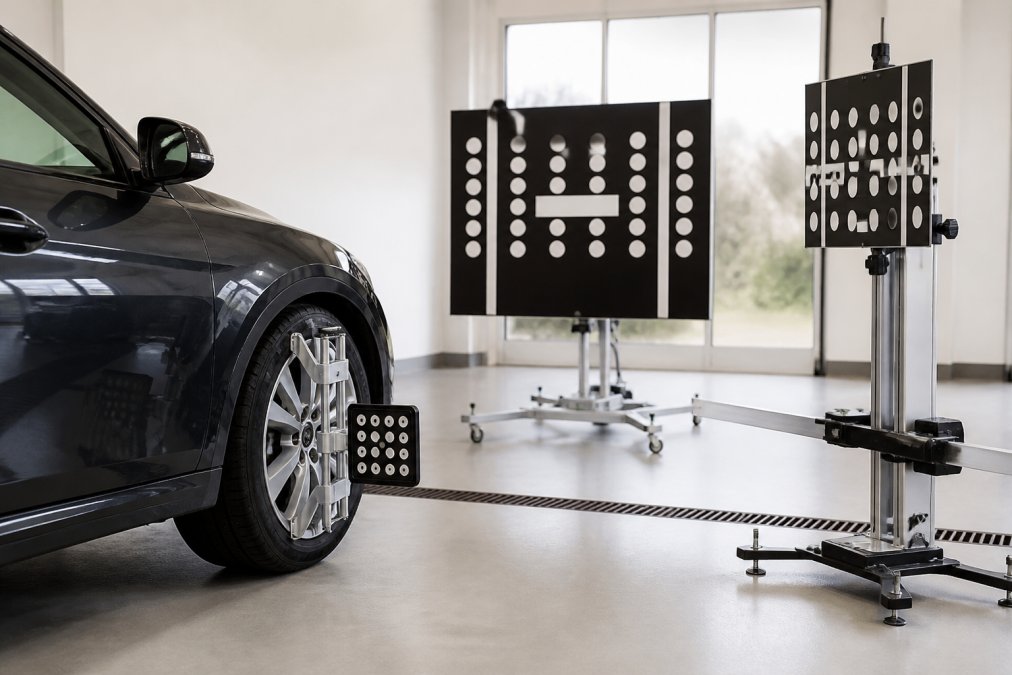
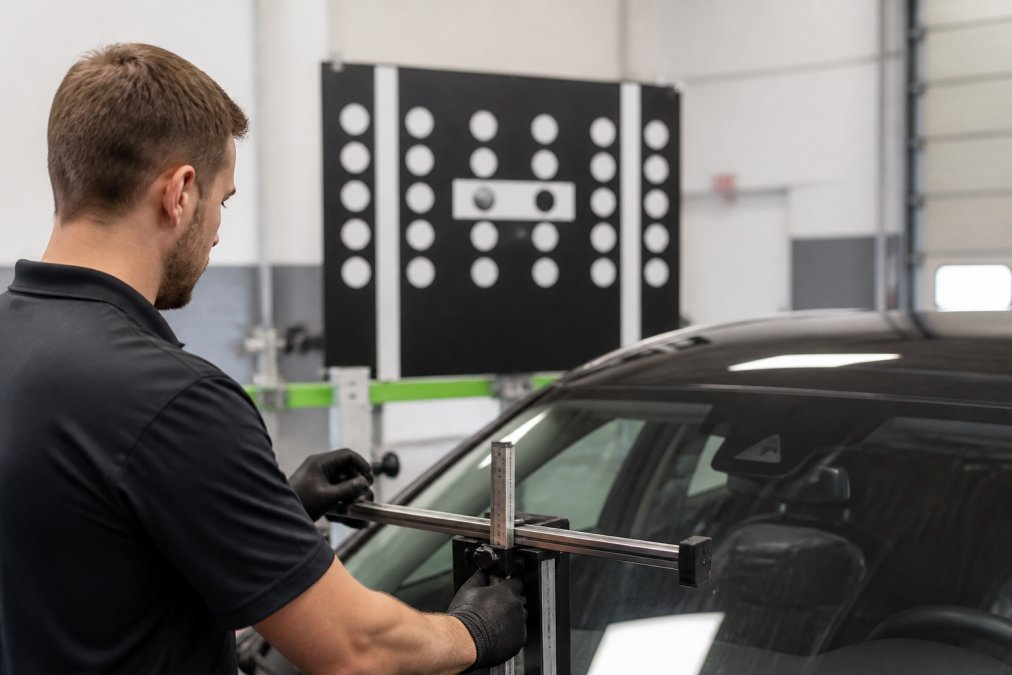
Static calibration uses physical calibration targets, large printed patterns or reflective boards, positioned at precise distances from the vehicle. The vehicle is parked, and diagnostic equipment measures the camera's view of these targets against OEM specifications. The technician adjusts the camera mount until alignment is perfect. This method typically takes 30-60 minutes and is ideal for shops with proper equipment and controlled environments.
Dynamic calibration involves driving the vehicle on a road or test track while the diagnostic system monitors real-world sensor data. The camera's ability to detect lane markings, vehicles, and road features is validated against what the system should be detecting. This method confirms that the camera works correctly in actual driving conditions. Dynamic calibration takes longer, often 30 minutes to over an hour of driving, but provides comprehensive validation.
The choice between static and dynamic often depends on the vehicle's design. Some manufacturers specify static calibration only, others require dynamic validation. Many shops perform both to ensure complete accuracy.
How Long Does ADAS Calibration Take
Static calibration typically requires 30-60 minutes (sae.org). Dynamic calibration takes longer because it involves driving the vehicle, usually 45 minutes to 1.5 hours total, including setup and diagnostic connection.
Many vehicles require both methods, taking 1-2 hours. Some complex vehicles with multiple camera systems take even longer. The time also depends on whether the calibration is straightforward or requires significant adjustments. A camera that's only slightly out of alignment might need just 30 minutes, while one that's significantly misaligned might require multiple adjustment attempts.
At BL Auto Glass, we coordinate calibration timing with windshield replacement. Since adhesive must cure for 24 hours before calibration, we typically schedule calibration for the next business day. The entire process is completed within 48 hours for most vehicles.
Signs Your Vehicle Needs ADAS Calibration
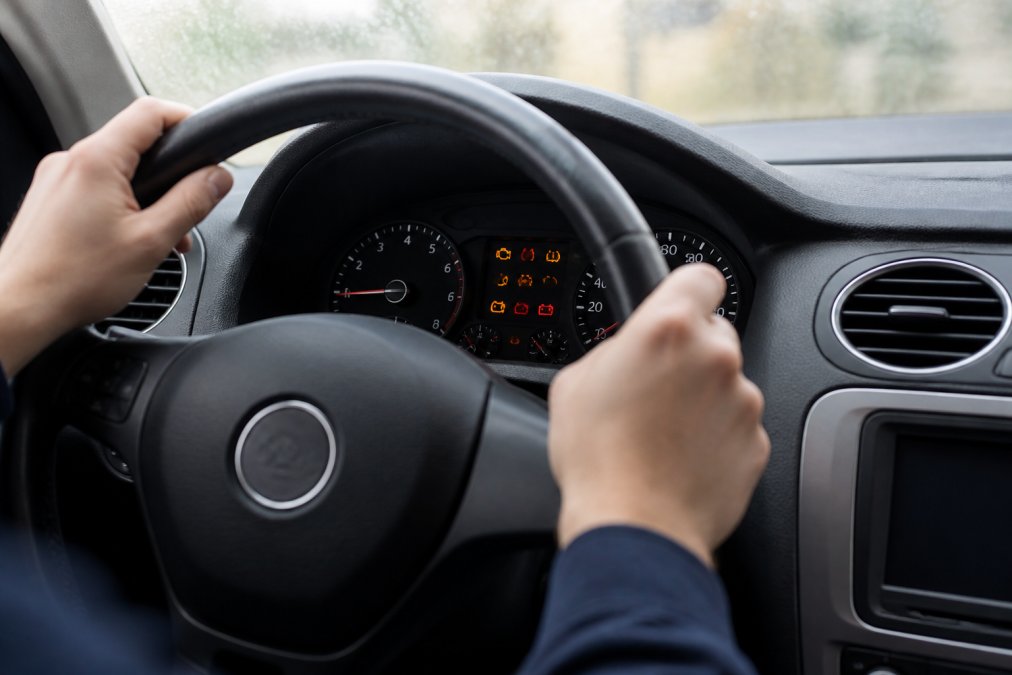
The most obvious sign is a warning light on your dashboard related to your ADAS system, often labeled "Lane Departure Warning," "Collision Warning," or "ADAS System Fault."
False or erratic warnings are another indicator. If your lane departure warning triggers constantly even when you're driving straight, or if your forward collision warning activates when there's no vehicle ahead, the camera is likely misaligned.
A diagnostic scanner may pull a code related to your ADAS camera, indicating calibration is needed. Loss of expected functionality is subtle but serious: if your lane departure warning no longer alerts you during highway driving, or if your emergency braking system doesn't engage when it should, the camera may have drifted out of alignment.
After windshield replacement or collision repair, assume calibration is needed. Don't wait for warning lights or system failures. BL Auto Glass includes diagnostic verification and recalibration in our windshield replacement service, ensuring your ADAS systems are functioning correctly before you drive away.
Professional Calibration vs. DIY: What You Need to Know
Attempting to calibrate ADAS camera systems yourself is not practical. The equipment required, diagnostic scanners, calibration targets, and specialized software, costs thousands of dollars. More importantly, the precision required is beyond what DIY methods can achieve. ADAS camera alignment demands accuracy within fractions of a degree. A misalignment of 0.5 degrees is enough to cause system failures (nhtsa.gov).
Professional technicians use calibrated equipment, controlled environments, and OEM-specific procedures to achieve the required precision. The liability is also significant: if you perform DIY calibration and your ADAS system fails to prevent a collision, you're responsible for the consequences. Insurance may not cover damages if the vehicle was improperly serviced.
Some vehicle owners attempt to "reset" ADAS systems by disconnecting the battery or using diagnostic tools purchased online. These methods don't actually calibrate the camera; they only clear warning lights temporarily. The underlying misalignment remains.
Professional calibration ensures your ADAS systems work correctly and protects you legally and financially. This is one area where professional service is genuinely the only appropriate choice.
Insurance Coverage and Cost Considerations
Insurance coverage for ADAS camera calibration depends on your policy and the circumstances triggering the need for calibration. If your windshield is covered under comprehensive insurance and you file a claim for replacement, calibration is often included in the repair estimate. Many insurers recognize that windshield replacement and ADAS recalibration are inseparable parts of a complete repair.
However, some insurance policies limit coverage to the glass replacement itself, treating calibration as a separate service. Discuss this with your insurance agent before authorizing any windshield work.
Under Florida law, comprehensive insurance policies that cover windshield replacement typically waive the deductible for glass claims, meaning your windshield replacement is often covered at no cost. Calibration, when performed as part of the windshield replacement, is usually included in this coverage.
If your vehicle needs calibration due to collision repair, the body shop should include it in the estimate. Collision insurance typically covers all work necessary to return the vehicle to pre-accident condition, including ADAS recalibration if sensors were affected.
At BL Auto Glass, we include ADAS camera recalibration in our windshield replacement service at no additional charge when your insurance covers the glass replacement. We handle insurance claims from start to finish, often resulting in a $0 deductible installation under Florida law.
ADAS camera calibration is one of those safety processes that happens invisibly but matters enormously. Your vehicle's advanced driver-assistance systems represent thousands of dollars of safety technology that only works if cameras are precisely aligned. After windshield replacement or collision repair, calibration isn't optional; it's the final step that ensures your investment in safety actually protects you and your passengers.
If you've had windshield work done recently or your vehicle is displaying ADAS system warnings, professional calibration is your next step. BL Auto Glass handles both windshield replacement and ADAS camera recalibration as a complete service, ensuring your vehicle's safety systems are validated and working correctly. Book an appointment today and drive with confidence knowing your advanced driver-assistance systems are functioning exactly as designed.
Frequently Asked Questions
Q: Is ADAS camera calibration necessary after windshield replacement?
A: Yes. When your windshield is replaced, the camera's position and angle can shift even slightly, disrupting its ability to detect lane markings, pedestrians, and vehicles. Advanced driver-assistance systems depend on precise sensor alignment to function correctly. Without recalibration, your forward collision warning, lane departure warning, and emergency braking features may not respond accurately, compromising your safety. Professional recalibration restores the camera to OEM specifications and ensures all driver assistance features work as designed.
Q: What happens if you don't calibrate your ADAS camera?
A: Uncalibrated sensors can produce false readings or fail to detect hazards entirely. Your lane departure warning might trigger incorrectly on straight roads, or fail to alert you when drifting. Forward collision warning systems may not activate in genuine emergencies, leaving you without critical safety-critical system support when you need it most. Misaligned sensors can affect insurance claims if an accident occurs. Vehicle safety standards require these systems to function within precise tolerances.
Q: How long does the ADAS calibration process take?
A: Static calibration typically takes 30 minutes to 1 hour and is performed in a controlled shop environment using calibration targets. Dynamic calibration takes 15-30 minutes of actual road driving to verify system accuracy under real-world conditions. Total time depends on your vehicle's specific systems and whether both methods are needed. Some shops combine both approaches for comprehensive verification. BL Auto Glass coordinates scheduling to minimize your downtime while ensuring thorough post-repair procedures.
Q: Does insurance cover ADAS camera calibration costs?
A: Most comprehensive and collision policies cover ADAS recalibration when it's performed as part of windshield replacement, since it's considered a necessary post-repair procedure. However, coverage varies by insurer and policy. Some policies include it under glass coverage; others treat it separately. Verify with your insurance company before repair to understand your coverage. Many insurers approve recalibration automatically when you mention windshield replacement. BL Auto Glass handles insurance claim processing to clarify what's covered and work toward your $0 deductible under Florida law.
Q: Can I drive my vehicle safely before ADAS calibration is performed?
A: Technically, yes, your vehicle will operate normally. However, your advanced driver-assistance systems are not functioning at full capacity. Lane departure warning, forward collision warning, and emergency braking features may be unreliable or inactive. You lose the safety benefit these systems provide, increasing your risk in critical situations. For this reason, calibration should be completed as soon as possible after windshield replacement. Driving without properly functioning ADAS systems also means you lack the sensor accuracy that modern vehicle safety standards require.
Q: What's the difference between static and dynamic ADAS calibration?
A: Static calibration uses fixed calibration targets in a controlled shop environment to align cameras and sensors to OEM specifications. It's precise and quick but doesn't verify real-world performance. Dynamic calibration involves driving your vehicle on the road so the system can verify accuracy under actual driving conditions, detecting any residual drift or misalignment. Many shops use both methods together: static calibration ensures initial alignment, then dynamic calibration confirms the system works correctly on the road. This combined approach provides the most comprehensive verification of system accuracy.
Q: Can I do ADAS calibration myself?
A: No. ADAS calibration requires specialized diagnostic equipment, calibration targets, and technician training to align optical sensors and radar systems to exact OEM specifications. Improper calibration creates safety hazards and may damage your vehicle's systems. Professional technicians have the tools to perform both static and dynamic calibration, verify results, and document the work for insurance and warranty purposes. Attempting DIY calibration risks false readings, undetected hazards, and potential liability if an accident occurs. Professional recalibration is the only safe, reliable option.
This article was written using GrandRanker