
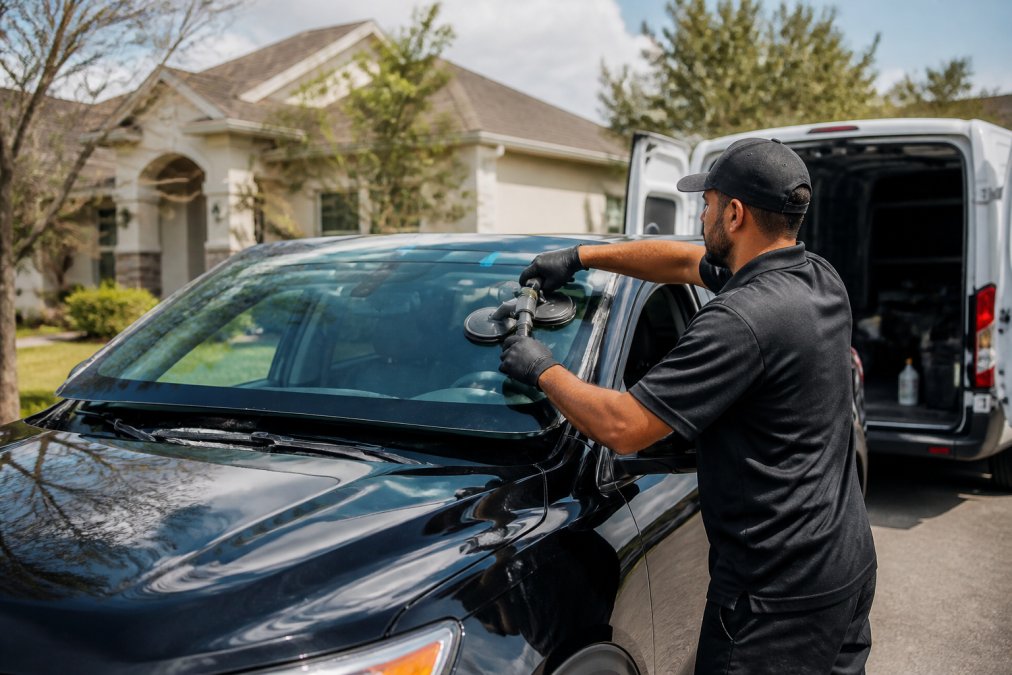
 ultimate-guide
Windshield Replacement Zero Deductible Florida Guide
Table of Contents
- Florida's Zero Deductible Windshield Replacement Law, Explained
- Does Insurance Cover Windshield Chip Repair Under Comprehensive?
- OEM vs. Aftermarket Glass: Which One Does Your Policy Cover?
- Windshield Camera Recalibration Requirements After Replacement
- How to File an Auto Glass Insurance Claim Without Getting Denied
- Zero Deductible Windshield Replacement: What to Expect on the Day
- Conclusion
Last Updated: August 18, 2026
Florida's Zero Deductible Windshield Replacement Law, Explained
Florida is one of a small number of states that requires insurers to cover auto glass replacement without charging policyholders a deductible, provided the driver carries comprehensive coverage. At BL Auto Glass, we handle hundreds of these claims each year, and the single most common source of confusion is the gap between what the law says and what insurance companies tell customers when they call in. This guide closes that gap.
Zero deductible windshield coverage in Florida is a statutory protection, not a courtesy. The law exists because the state legislature recognized that cracked or chipped glass is a genuine safety hazard, and that deductibles were discouraging drivers from fixing damaged windshields before they became dangerous.
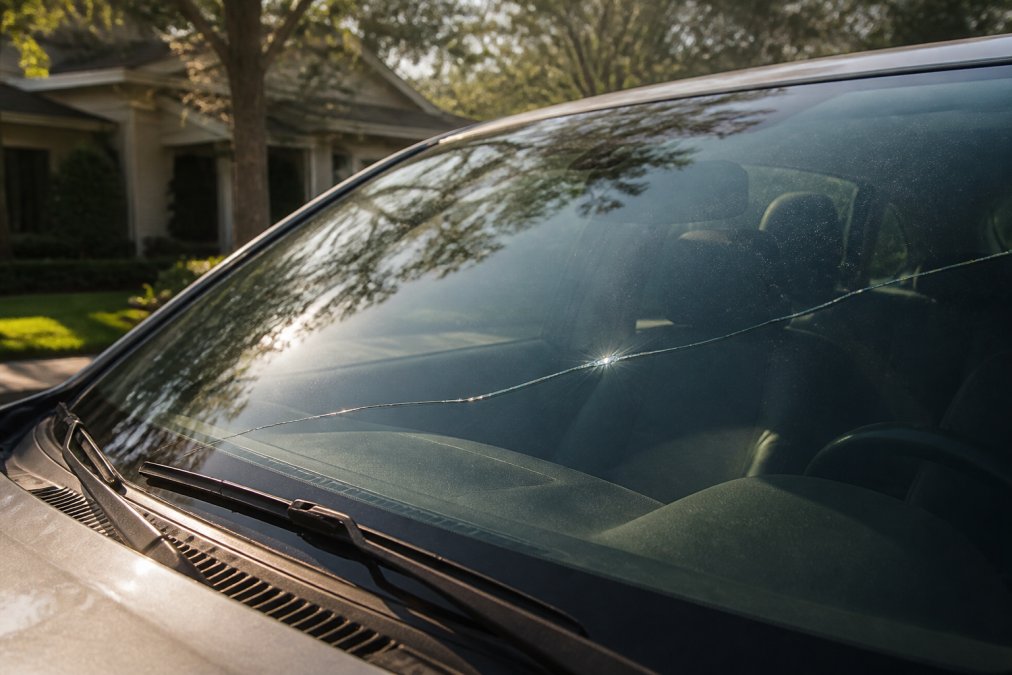
What the Statute Actually Says
Florida Statute § 627.7288 is the operative law. It states that any comprehensive insurance policy issued in the state must provide full glass coverage without a deductible. The plain-language reading is straightforward: if your policy includes comprehensive coverage and your windshield is damaged, your insurer must pay for the repair or replacement with no out-of-pocket cost to you.
The statute applies to the windshield specifically. Side windows, rear glass, and sunroofs may be subject to your standard comprehensive deductible depending on your policy terms. Many drivers assume the zero-deductible rule covers all glass, it does not. Windshield integrity is the focus of the law because it is a primary structural safety component and a mounting surface for safety-critical sensors.
Post-2023 Legislative Reality: What Changed and What Didn't
Here's where it gets complicated. The 2023 Florida legislative session introduced significant property and casualty insurance reforms, and some of those changes directly affected auto glass claims. The most consequential change was the elimination of Assignment of Benefits (AOB) for auto glass claims.
Before 2023, a policyholder could sign over their insurance claim rights to a glass shop, which would then bill the insurer directly and, if the insurer underpaid, sue them. This created a wave of litigation that insurers argued was fraudulent. The legislature agreed and removed the AOB mechanism for auto glass.
What this means for you: the zero-deductible protection under § 627.7288 is unchanged. You still owe nothing out of pocket for a windshield replacement under a comprehensive policy. What changed is the administrative pathway. You are now the claimant of record, which is why working with a glass provider that handles the full claims process on your behalf, the way BL Auto Glass does, matters more than it did before 2023.
According to Florida Office of Insurance Regulation, policyholders retain the right to choose their own auto glass repair provider regardless of insurer preference or network recommendations.
Does Insurance Cover Windshield Chip Repair Under Comprehensive?
Comprehensive insurance does cover windshield chip repair, and in most cases, chip repair costs less than replacement, which means insurers are generally willing to approve it quickly. The real question is whether your specific damage qualifies for repair or requires a full replacement.
Repair vs. Replace: How Insurers Decide
Insurance adjusters use a fairly consistent set of criteria to determine whether a windshield can be repaired or must be replaced:
- Location of damage: Chips or cracks in the driver's direct line of sight are almost always grounds for replacement, even if the damage is small. Optical distortion in the driver's sightline is a safety issue that repair cannot fully resolve.
- Size of damage: Most industry guidelines treat chips smaller than a quarter and cracks shorter than three inches as repair candidates. Damage beyond those dimensions typically requires replacement.
- Depth of damage: A stone chip that has penetrated both layers of laminated glass cannot be repaired. Single-layer surface damage is repairable.
- Proximity to edges: Cracks that run to the edge of the glass compromise the structural bond and require replacement.
A common mistake drivers make is waiting. A small chip that could have been repaired for minimal cost spreads into a crack that requires full replacement within days, especially in Florida's heat. If you have a chip right now, the smart move is to get it assessed immediately.
The zero deductible windshield rule applies to both repair and replacement under comprehensive coverage. You should not owe anything for either service.
OEM vs. Aftermarket Glass: Which One Does Your Policy Cover?
Most standard comprehensive policies default to aftermarket glass unless the policyholder specifically requests OEM. This is the part of windshield replacement that most guides skip over, and it matters more than ever given how modern vehicles are built.
OEM glass (Original Equipment Manufacturer) is produced by the same manufacturer that supplied the glass for your vehicle when it was built. It meets the exact specifications for your vehicle's make, model, and year. Aftermarket glass is produced by third-party manufacturers and is designed to fit your vehicle but may have minor variations in thickness, tint, curvature, or coating.
For older vehicles without advanced driver-assistance systems, aftermarket glass is generally acceptable. The fit is good, the safety performance is comparable, and the cost is lower.
For newer vehicles, the calculus changes. If your windshield serves as the mounting surface for a forward-facing camera, a rain sensor, or a heads-up display, the glass specifications become critical. Minor variations in glass thickness or tint can affect camera calibration accuracy, sensor performance, and display clarity.
| Glass Type | Typical Use Case | ADAS Compatibility | Policy Default |
|---|---|---|---|
| OEM | New vehicles, ADAS-equipped | Highest compatibility | Rarely included |
| OEM-Equivalent | Mid-range vehicles | Good compatibility | Sometimes included |
| Aftermarket | Older vehicles, non-ADAS | Variable | Standard default |
If your vehicle has lane-keeping assist, automatic emergency braking, or any camera-based safety system, ask your insurer explicitly whether your policy covers OEM glass. Some policies include an OEM endorsement; others require you to add it. The difference in claim outcome can be significant.
Windshield Camera Recalibration Requirements After Replacement
Windshield camera recalibration is required any time a windshield is replaced on a vehicle equipped with forward-facing camera-based safety systems. This is not optional, and it is not a upsell. It is a technical requirement driven by how these systems work.
Does Insurance Pay for ADAS Recalibration?
Comprehensive insurance generally covers ADAS recalibration as part of a windshield replacement claim, because the recalibration is a necessary consequence of the covered loss. The key word is "necessary." If your vehicle requires calibration and you skip it, you are driving with safety systems that may not perform correctly in an emergency.
The National Highway Traffic Safety Administration's guidance on ADAS systems is clear that forward collision warning, automatic emergency braking, and lane departure systems depend on precise sensor alignment to function as designed. A windshield replacement that moves the camera mounting point even a fraction of a degree can throw off the system's detection angles.
Two types of recalibration exist:
- Static calibration: Performed indoors on a level surface using manufacturer-specific target boards. The vehicle must remain stationary during the process.
- Dynamic calibration: Performed by driving the vehicle at specific speeds on roads with clear lane markings until the system resets itself.
Some vehicles require one method; some require both. The requirement is determined by the vehicle manufacturer, not the glass shop or the insurer. BL Auto Glass includes professional camera recalibration when needed as part of the replacement service, so drivers are not left to arrange a separate dealer visit after the glass is installed.
How to File an Auto Glass Insurance Claim Without Getting Denied
Filing a glass claim incorrectly is the most common reason policyholders end up with unexpected out-of-pocket costs. The process is straightforward when you know the steps, but there are specific points where claims get derailed.
Step-by-Step Claim Denial Prevention Checklist
Use this checklist before and during your claim:
- Confirm you have comprehensive coverage. Collision-only policies do not include glass coverage. Log into your insurer's portal or call to verify before you schedule anything.
- Document the damage. Take clear photos of the crack or chip with something in frame for scale. Time-stamp the photos. This establishes the damage existed before the replacement.
- File the claim before the work begins. Do not have the glass replaced and then try to file retroactively. Most insurers require prior authorization.
- Confirm the zero-deductible rule applies. Reference Florida Statute § 627.7288 explicitly. Ask the claims representative to confirm in writing that no deductible will be charged for windshield glass.
- Confirm OEM vs. aftermarket glass. If your vehicle has ADAS systems, request OEM glass or OEM-equivalent and get that confirmed before the appointment.
- Ask whether calibration is covered. If your vehicle requires ADAS recalibration, confirm the claim includes that service. Get a claim number that covers both the glass and the calibration.
- Choose your own provider. You are not required to use an insurer's preferred network. Florida law protects your right to choose any licensed auto glass shop.
- Keep all documentation. Retain the claim number, the authorization confirmation, and the completed work order. If there is a dispute later, these are your evidence.
The thing nobody tells you about glass claims is that the insurer's first response is often designed to steer you toward their preferred network. That network may offer lower-quality glass or skip calibration to keep costs down. Knowing your rights before you call changes the entire conversation.
Insurance Information Institute guidance on comprehensive auto coverage
Zero Deductible Windshield Replacement: What to Expect on the Day
The actual replacement process is faster and less disruptive than most drivers expect. A standard windshield replacement takes roughly 60 to 90 minutes from the time the technician arrives. Mobile service means the work happens at your home, your office, or wherever your vehicle is parked, you do not need to arrange a ride or lose half a workday.
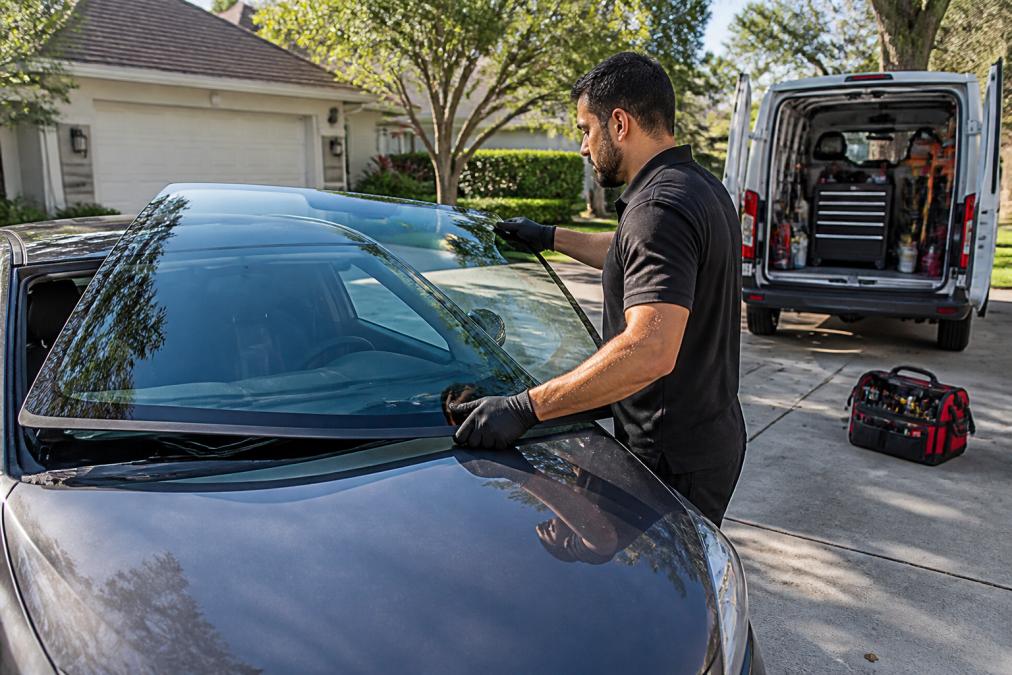
Here is what a typical appointment looks like:
- Technician arrival and vehicle inspection. The technician confirms the damage, reviews the claim authorization, and verifies the glass specification matches your vehicle.
- Removal of the damaged windshield. The old glass is carefully removed, and the frame is cleaned and inspected for rust or damage that could compromise the new seal.
- Adhesive application and glass installation. Automotive-grade urethane adhesive is applied to the frame. The new windshield is set and aligned precisely.
- Safe drive-away time. Most urethane adhesives require a minimum cure period before the vehicle is safe to drive. Your technician will give you a specific time, typically one hour or more depending on conditions.
- ADAS calibration, if required. If your vehicle has a forward-facing camera, calibration is performed after the adhesive has cured sufficiently to ensure the glass is in its final position.
One practical note: avoid car washes for at least 24 hours after installation. High-pressure water can stress a new seal before it has fully cured. The technician will walk you through any post-installation care specific to your vehicle.
Frequently Asked Questions
Does Florida waive the deductible for windshield replacement?
Yes. Under Florida Statute 627.7288, insurers must offer comprehensive coverage that waives the deductible specifically for auto glass repair or replacement. If your policy includes comprehensive coverage, your insurer cannot charge you a deductible for windshield work. However, the 2023 legislative overhaul eliminated the assignment of benefits provision that previously made zero deductible windshield replacement automatic for many policyholders, so confirming your specific policy terms before filing a claim is essential.
How do I qualify for free windshield replacement in Florida?
To qualify for zero deductible windshield replacement, you need an active comprehensive insurance policy that includes glass coverage without a deductible waiver exclusion. Contact your insurer to confirm your coverage eligibility before scheduling service. A reputable auto glass provider can also verify your coverage and handle the insurance claim on your behalf, which reduces the risk of paperwork errors that lead to out-of-pocket costs.
Does insurance cover windshield chip repair, or only full replacements?
Comprehensive insurance typically covers both windshield chip repair and full replacement. Insurers generally prefer to approve a repair for small stone chips because it costs less than a full replacement. If the chip is smaller than a quarter or the crack is shorter than roughly 15 centimeters and does not fall in the driver's primary line of sight, repair is usually approved. Larger damage, or damage that compromises windshield integrity, will trigger a full replacement claim instead.
Is ADAS camera recalibration covered by my insurance after a windshield replacement?
Many comprehensive policies cover ADAS calibration as part of the windshield replacement claim because the camera or sensor mount attaches directly to the glass. Coverage varies by insurer and policy limits, so confirm with your insurance adjuster before the job begins. Skipping recalibration after replacement is not an option on vehicles with lane-keeping assist, automatic emergency braking, or adaptive cruise control, those systems rely on the camera being precisely aligned to the new glass.
What changed after Florida's 2023 auto glass law reform?
The 2023 legislative overhaul eliminated assignment of benefits (AOB) for auto glass claims. Previously, policyholders could sign over their insurance rights to a glass shop, which then billed the insurer directly. Under the revised statute, the policyholder must now be more directly involved in the claims process. The zero deductible protection under Florida Statute 627.7288 still exists, but policyholders need to verify their policy language and work with a provider who understands the updated claim processing requirements.
Will a windshield replacement raise my insurance premium?
Filing a comprehensive glass claim in Florida generally does not increase your insurance premium the way an at-fault collision claim would. Comprehensive claims are considered non-fault events. That said, insurers can set their own rating guidelines, so checking with your insurer before filing is a reasonable step. Most policyholders find that using their zero deductible glass coverage has no measurable impact on their renewal rate.
Managing a windshield claim while keeping up with everything else is genuinely inconvenient. BL Auto Glass handles the full insurance claim process from first call to completed installation, including ADAS camera recalibration when your vehicle requires it. With same-day appointments, free mobile service, and a lifetime warranty, the goal is to make the entire experience as close to effortless as possible. Book now and get your windshield replaced at zero cost to you.
This article was written using GrandRanker