
 how-to
How to Prevent Windshield Cracks from Spreading
Table of Contents
- Why Windshield Cracks Spread (and Why Speed Matters)
- Immediate Steps to Stop Windshield Cracks from Spreading
- Windshield Repair Kit Instructions: DIY Resin Injection
- Is It Safe to Drive with a Cracked Windshield?
- Windshield Crack Repair vs Replacement: How to Decide
- How Long Does Windshield Repair Take, and What to Expect
- Climate-Specific Tips for Hot and Humid Conditions
- Frequently Asked Questions
Last Updated: August 16, 2026
Why Windshield Cracks Spread (and Why Speed Matters)
A windshield crack is not a static problem. The moment a rock chip or stress fracture appears, a countdown begins. Windshield integrity depends on the bond between two layers of glass and a polyvinyl butyral interlayer. Once that bond is compromised, the surrounding glass becomes structurally vulnerable. Tensile stress concentrates at the crack tip, and any additional force, heat, vibration, or pressure drives the fracture further through the glass.
A bullseye crack or star break that looks stable on Monday morning can spider across your entire windshield by Friday afternoon. Once a crack crosses your line of sight or exceeds roughly 12 inches in length, repair is no longer an option. Replacement becomes the only path.
How Temperature Fluctuations Drive Crack Growth
Thermal expansion is one of the most aggressive crack accelerators. Glass expands when heated and contracts when cooled, applying mechanical stress directly to an existing fracture. Running your defroster on high after a cold night is one of the fastest ways to turn a minor chip into a full stress crack. Even moderate daily temperature cycles accumulate stress over time.
The practical rule: keep the interior temperature change gradual. Use low defroster settings rather than maximum heat, and park in shade when possible.
Vibration, Road Impact, and Structural Damage
Road vibration is a constant, low-level threat to any existing crack. Every pothole, railroad crossing, and rough road surface sends mechanical energy through the vehicle's frame and into the windshield. Driving at highway speeds amplifies the problem, as wind pressure differentials add tensile stress to an already weakened area. A crack that seems stable at 30 mph may visibly grow after a highway commute. Reducing vibration exposure means driving smoothly and avoiding rough roads when possible.
Immediate Steps to Stop Windshield Cracks from Spreading
The first 24 to 48 hours after a crack appears are the most critical window for damage control. Knowing how to prevent windshield cracks from spreading in those early hours can mean the difference between a quick repair and a full replacement.
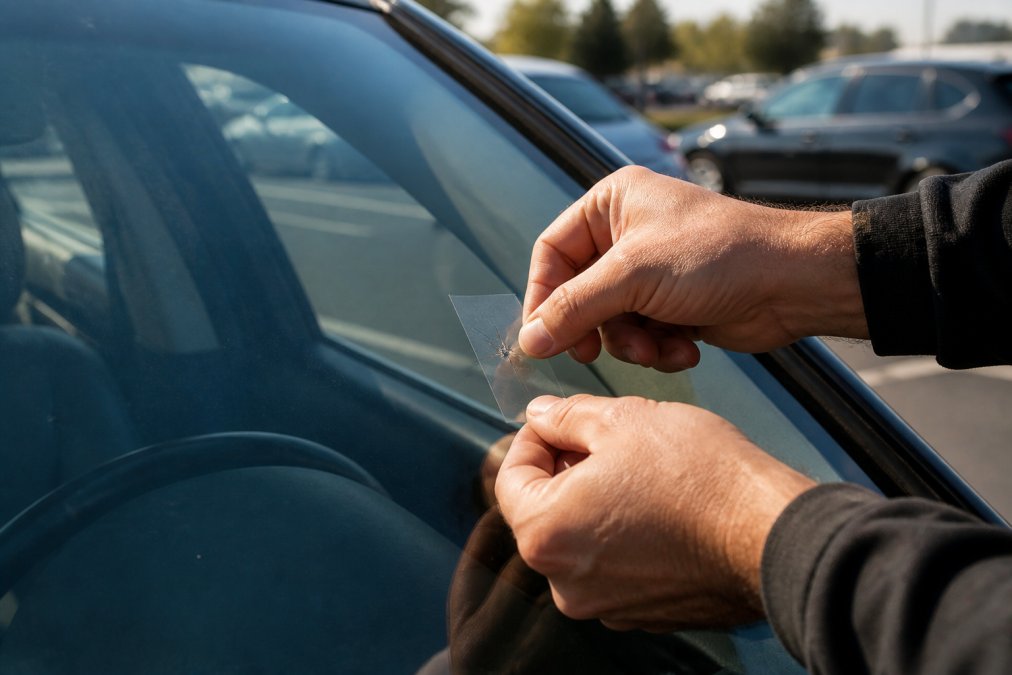
Apply Clear Adhesive Tape as a Temporary Seal
Clear adhesive tape serves one purpose: keeping debris contamination and moisture ingress out of the crack until a professional can inject resin. Press a strip of clear tape firmly over the impact point, covering the entire crack length. Use transparent tape rather than masking or duct tape, which leave residue that can interfere with the curing process.
This is a temporary seal only. Tape does not bond the glass or stop stress fractures from propagating internally.
Drill a Stop-Hole at the Crack's Leading Edge
Stop-hole drilling is a technique used by glass technicians to interrupt crack propagation at its tip. A small hole drilled precisely at the leading edge of a crack relieves the tensile stress concentration that drives the fracture forward. This technique requires a carbide or diamond-tipped drill bit sized appropriately for auto glass. Unless you have experience with auto glass repair, this is a step best left to a professional.
Avoid Car Washes and Pressure Washing
Automated car washes subject windshields to high-pressure water jets, mechanical brushes, and rapid temperature changes. Pressure washing forces moisture deep into the crack, contaminating the area that resin needs to bond to. Skip the car wash entirely until the crack is repaired or the windshield is replaced.
Windshield Repair Kit Instructions: DIY Resin Injection
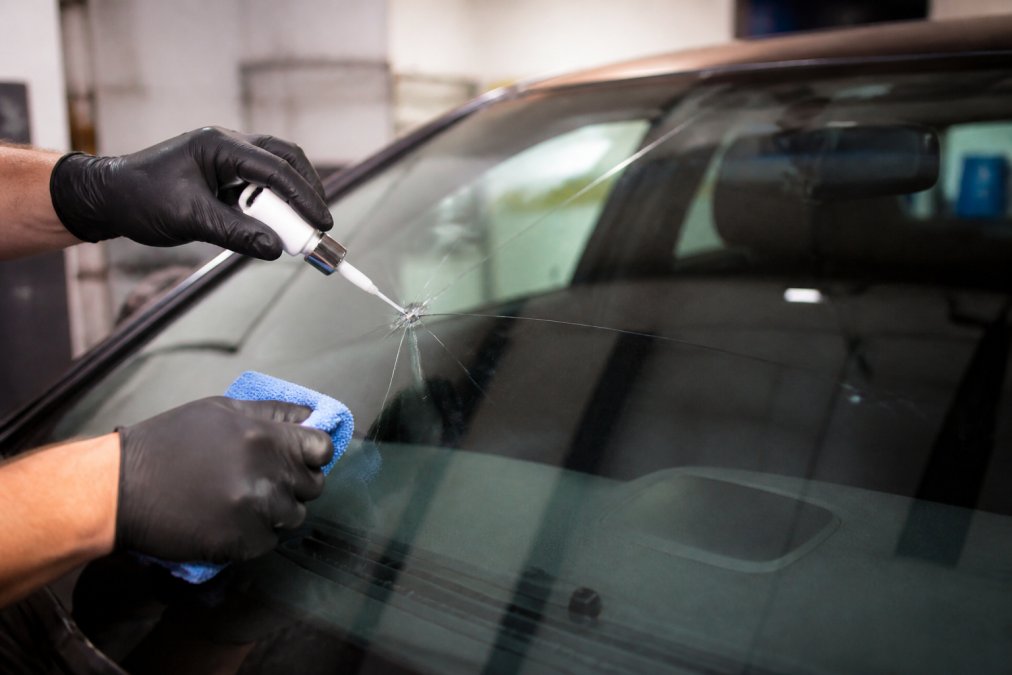
A windshield repair kit uses resin injection to fill a rock chip or small crack, restoring structural integrity and optical clarity. Most kits are designed for bullseye cracks and star breaks smaller than a quarter. Longer stress cracks and edge cracks generally exceed what DIY kits can handle reliably.
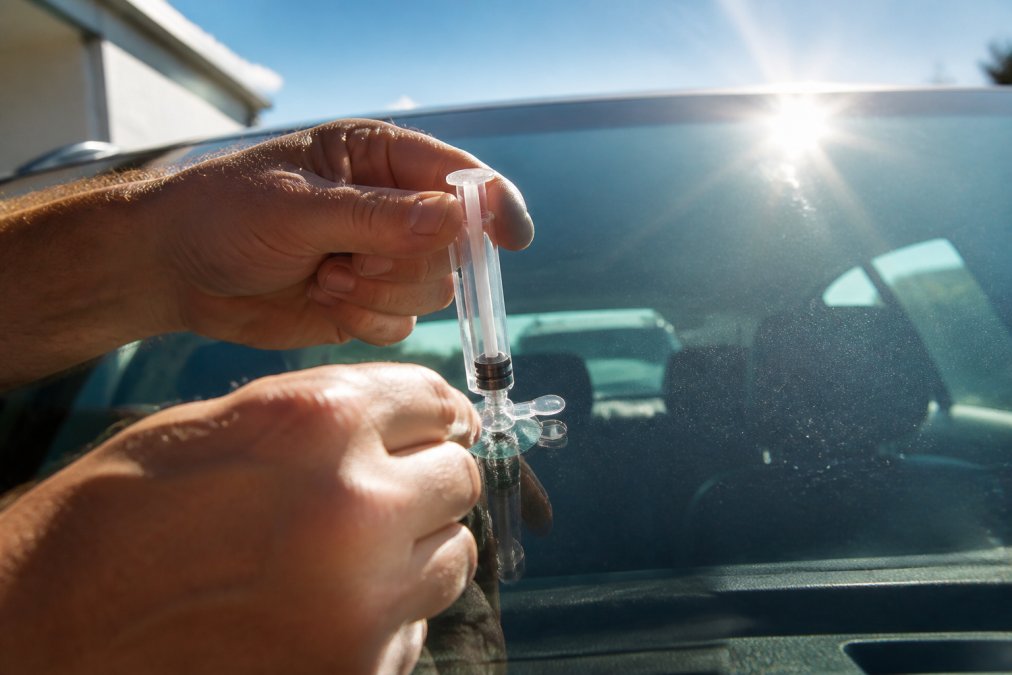
Step-by-step resin injection process:
- Clean the impact point. Remove the clear adhesive tape and clean the area with the alcohol prep pad included in the kit. Ensure the area is completely dry before proceeding.
- Position the injector. Center the suction-cup injector directly over the chip or crack, aligning it precisely with the impact point.
- Create a vacuum. Pull the plunger up to draw air out of the crack. Hold for 60 seconds to allow the vacuum to open the fracture.
- Inject the resin. Push the plunger down slowly to force resin into the crack. The resin should flow visibly into the damage.
- Repeat the vacuum/injection cycle. Most kits recommend two to three cycles to ensure full penetration.
- Apply the curing strip. Place the plastic curing strip over the injected resin and park the vehicle in direct sunlight or use the UV light included in the kit. The UV light curing process typically takes 5 to 10 minutes.
- Remove excess resin. Once cured, use the included razor blade to remove any resin that has cured above the glass surface.
The result will not be invisible, but the crack should no longer propagate and the structural integrity of the windshield is restored. According to the Auto Glass Safety Council's repair standards, chips larger than one inch in diameter and cracks longer than three inches generally fall outside the parameters where DIY repair is reliable.
Is It Safe to Drive with a Cracked Windshield?
Driving with a cracked windshield is safe in the short term for minor chips away from the driver's line of sight, but the risk increases rapidly as the crack grows. The windshield is a structural component of your vehicle. Under Federal Motor Vehicle Safety Standards from the National Highway Traffic Safety Administration, windshields must meet specific requirements for visibility and structural integrity.
The practical safety thresholds most glass technicians use:
| Damage Type | Size Threshold | Safe to Drive? | Action Required |
|---|---|---|---|
| Rock chip (bullseye) | Smaller than a quarter | Yes, temporarily | Repair within 48 hours |
| Star break | Smaller than 3 inches | Yes, temporarily | Repair within 48 hours |
| Stress crack | Any length | Use caution | Professional evaluation immediately |
| Edge crack | Any length | No | Replace windshield |
| Crack in driver's line of sight | Any size | No | Replace windshield |
A crack that reaches the edge of the windshield is a structural emergency. Edge cracks compromise the windshield's ability to support the roof in a rollover and can cause the glass to fail during airbag deployment.
Windshield Crack Repair vs Replacement: How to Decide
The repair-versus-replacement decision comes down to three factors: crack size, crack location, and crack type. Here is the clearest framework for making the call:
- Repair: Single chip smaller than one inch, star break under three inches, no edge involvement, outside the primary viewing area
- Replace: Any crack longer than six inches, edge crack, damage in the driver's direct line of sight, multiple impact points, damage to the inner layer of laminated glass
The inner layer distinction matters. Laminated glass has two glass layers bonded by a polyvinyl butyral interlayer. If the inner glass layer is cracked, the structural compromise is more serious than surface damage alone.
How Long Does Windshield Repair Take, and What to Expect
Windshield repair for a single chip or small crack typically takes 30 to 45 minutes from start to finish. Full windshield replacement takes 60 to 90 minutes for the physical installation, followed by a cure time for the urethane adhesive that bonds the new glass to the frame. Most installers recommend waiting at least one hour before driving.
For vehicles equipped with advanced driver assistance systems (ADAS), camera recalibration adds time to the process. The forward-facing camera mounted to the windshield must be recalibrated after replacement to ensure lane-keeping assist, automatic emergency braking, and other safety features function correctly.
Insurance, Florida Law, and the $0 Deductible Option
Florida is one of a small number of states with a no-deductible windshield replacement law. Under Florida Statute 627.7288, insurers providing comprehensive auto insurance coverage must offer windshield replacement without a deductible. This means drivers with comprehensive coverage can typically get a full windshield replacement at no out-of-pocket cost.
The windshield claim is processed separately from other comprehensive claims. According to Florida's insurance statutes on motor vehicle glass coverage, this protection applies specifically to motor vehicle glass replacement.
BL Auto Glass handles the entire insurance claim process from start to finish, eliminating the paperwork burden and reducing the risk of processing errors that could result in unexpected charges.
Climate-Specific Tips for Hot and Humid Conditions
Hot, humid climates create specific challenges for cracked windshields. High ambient temperatures accelerate thermal expansion, while humidity drives moisture ingress into existing cracks faster than in drier climates. Both effects worsen crack propagation and reduce the window for effective repair.
Practical adjustments for hot and humid conditions:
- Park in shade whenever possible. Direct sun exposure can raise the glass surface temperature dramatically, accelerating crack growth.
- Avoid blasting cold AC directly onto the glass. The rapid temperature differential is a reliable crack accelerator. Set the AC to a moderate temperature and let the interior cool gradually.
- Act faster than you would in a cooler climate. The 48-hour window for effective repair shrinks in high heat. Moisture and debris contamination set in more quickly when temperatures are elevated.
- Avoid parking with the windshield facing west in the afternoon. Late-afternoon sun maximizes heat absorption at the glass surface.
- Do not use your defroster on high in the morning. Use low defroster settings and allow the temperature to equalize gradually.
High humidity also affects the curing process for DIY resin injection. Moisture in the air can interfere with resin adhesion. Professional repair in a controlled environment will produce a more reliable result than a parking lot DIY attempt.
For anyone dealing with a spreading crack in a hot climate, the priority is simple: get it addressed quickly. The longer a crack sits in high heat and humidity, the more likely it is to grow beyond the threshold for repair.
| Situation | Recommended Action | Urgency |
|---|---|---|
| Fresh chip, smaller than a quarter | Apply tape, book repair | Within 48 hours |
| Star break under 3 inches | Apply tape, consider DIY kit or pro repair | Within 48 hours |
| Crack in driver's line of sight | Do not drive; contact a technician | Immediate |
| Edge crack, any length | Do not drive; replacement required | Immediate |
| Crack longer than 6 inches | Replacement required | Same day |
| Vehicle with ADAS camera | Professional replacement + recalibration | Same day |
As documented in ADAS calibration guidance from the Society of Automotive Engineers, forward-facing camera systems require precise calibration after windshield replacement to maintain the safety tolerances they were designed to operate within.
A spreading windshield crack is one of those problems that punishes delay. The crack will not stabilize on its own, and every day of inaction narrows your options. BL Auto Glass offers same-day mobile service, handles your insurance claim from start to finish, and includes ADAS camera recalibration when needed. With a lifetime warranty and over 10 years of family-owned operation, the team brings the repair to you. Book now and get back on the road with a windshield that meets Federal Motor Vehicle Safety Standards.
Frequently Asked Questions
How likely is a windshield crack to spread?
Very likely if left untreated. A rock chip or stress fracture can extend several inches within days due to thermal expansion, vibration from driving, and moisture ingress at the impact point. Hot climates accelerate this significantly, a chip that looks minor in the morning can become a full stress crack by afternoon. Sealing the damage with clear adhesive tape immediately and scheduling a professional resin injection within 24 to 48 hours gives you the best chance of stopping windshield cracks from spreading further.
Is it safe to drive with a cracked windshield?
It depends on the size, location, and type of crack. A small bullseye crack away from the driver's line of sight poses limited immediate risk, but any crack longer than 6 inches, or one that falls within the driver's primary viewing area, compromises windshield integrity and can obstruct visibility. Laminated glass is designed to hold together on impact, but a crack weakens the polyvinyl butyral layer. Most state safety inspections will flag cracks in the line of sight as a fail. Get it assessed by a glass technician promptly.
Is it better to repair or replace a windshield with a crack?
Repair works well for chips smaller than a quarter and cracks shorter than 6 inches that are not in the driver's line of sight and have no debris contamination or moisture ingress. Replacement is the right call when the crack reaches the windshield's edge, runs through the driver's view, or has spread too far for resin injection to restore optical clarity. Windshield crack repair vs replacement also comes down to cost: under comprehensive insurance with Florida's zero-deductible provision, full auto glass replacement may cost you nothing out of pocket.
Does temperature change cause windshield cracks to spread?
Yes. Glass expands and contracts with temperature fluctuations, creating tensile stress along any existing crack or chip. Blasting hot or cold air from your defroster directly onto cold or sun-heated glass is one of the fastest ways to turn a minor rock chip into a star break or running crack. Parking in shade, avoiding extreme defroster settings, and keeping your cabin temperature change gradual all reduce the thermal expansion forces acting on damaged laminated glass.
This article was written using GrandRanker