 listicle
Affordable Windshield Replacement Without Insurance
Table of Contents
- What Affects the Average Cost of Windshield Replacement
- OEM vs Aftermarket Windshield Glass: Which Should You Choose?
- Windshield Recalibration Cost and Why ADAS Matters
- Repair vs. Replacement: A Visual Damage Guide
- DIY Repair Kits vs. Professional Windshield Replacement
- How to Get the Best Cash Price for Windshield Replacement
- Safety Risks of Driving With a Cracked Windshield
- Conclusion
Last Updated: August 19, 2026
Paying out of pocket for a cracked windshield feels like getting hit twice. The damage is already done, and now you're facing an unknown bill with no insurance buffer. At BL Auto Glass, we work with cash-paying drivers every day, and the single biggest mistake we see is people accepting the first quote they get without understanding what actually drives the price. This guide breaks down every factor that affects the average cost of windshield replacement, explains when repair beats replacement, and gives you concrete tactics to secure the best cash price available.
What Affects the Average Cost of Windshield Replacement
The average cost of windshield replacement varies significantly based on vehicle type, glass quality, and whether your car has advanced safety technology built into the glass. Several core variables determine your final quote:
- Vehicle make, model, and year, luxury and European vehicles typically require specialty glass that costs more to source
- Glass type, OEM versus aftermarket glass carry different price points and quality levels
- ADAS features, cameras and sensors mounted to or near the windshield require recalibration after replacement
- Mobile vs. in-shop service, delivery model affects overhead and sometimes price
- Geographic labor rates, technician time is priced differently by market
Understanding these factors before you call for a quote puts you in a much stronger negotiating position.
Vehicle Make, Model, and Glass Type
The vehicle's year, make, and model is the single largest pricing variable. A windshield for a standard commuter sedan costs considerably less than one for a full-size pickup or a premium European vehicle. Glass for newer vehicles with embedded defrosters, rain sensors, or heads-up display projectors involves more complex manufacturing, which raises the part cost before labor is even factored in.
Laminated glass construction is standard across all modern windshields, as required by federal safety standards. What differs is the complexity of the laminate, whether it carries acoustic dampening layers, solar coatings, or embedded wiring. Each added layer increases both the part cost and the skill required for proper installation.
Mobile Service vs. In-Shop Installation
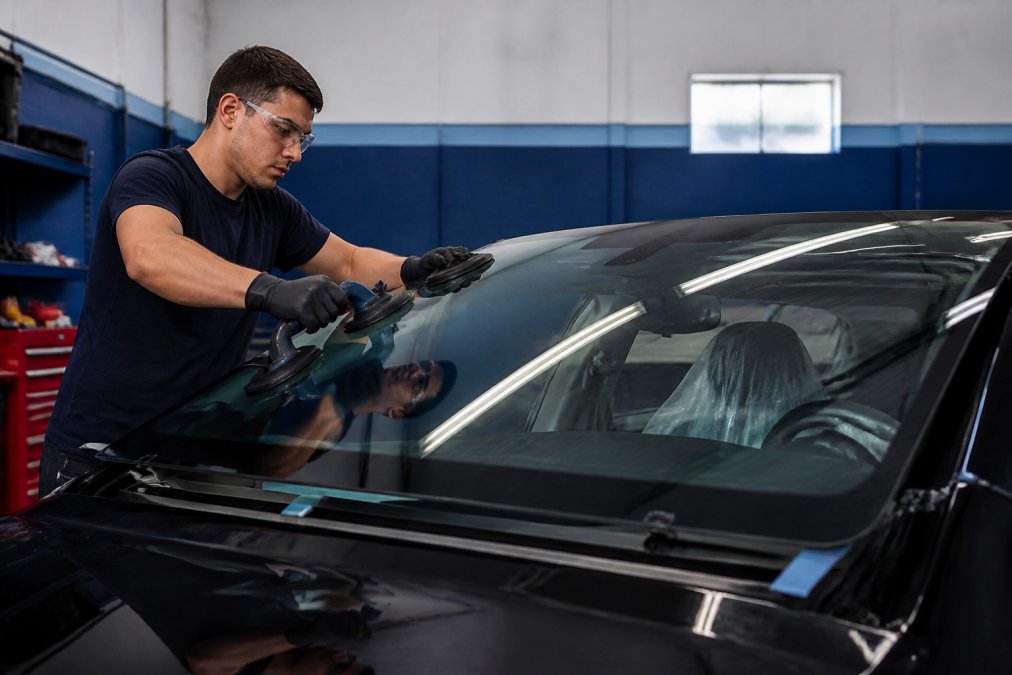
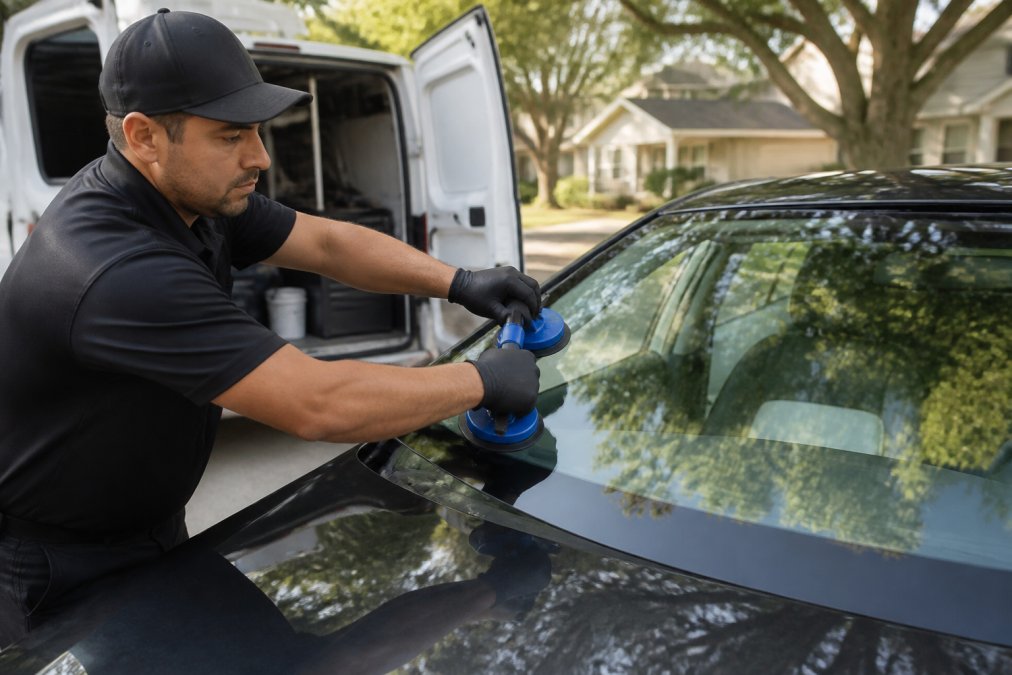
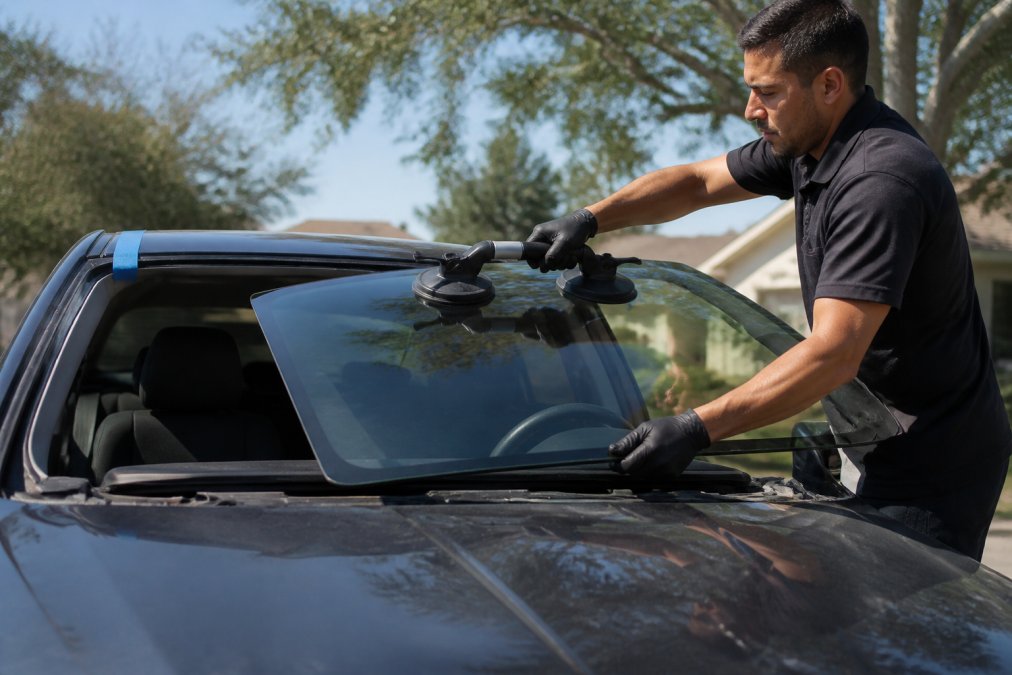
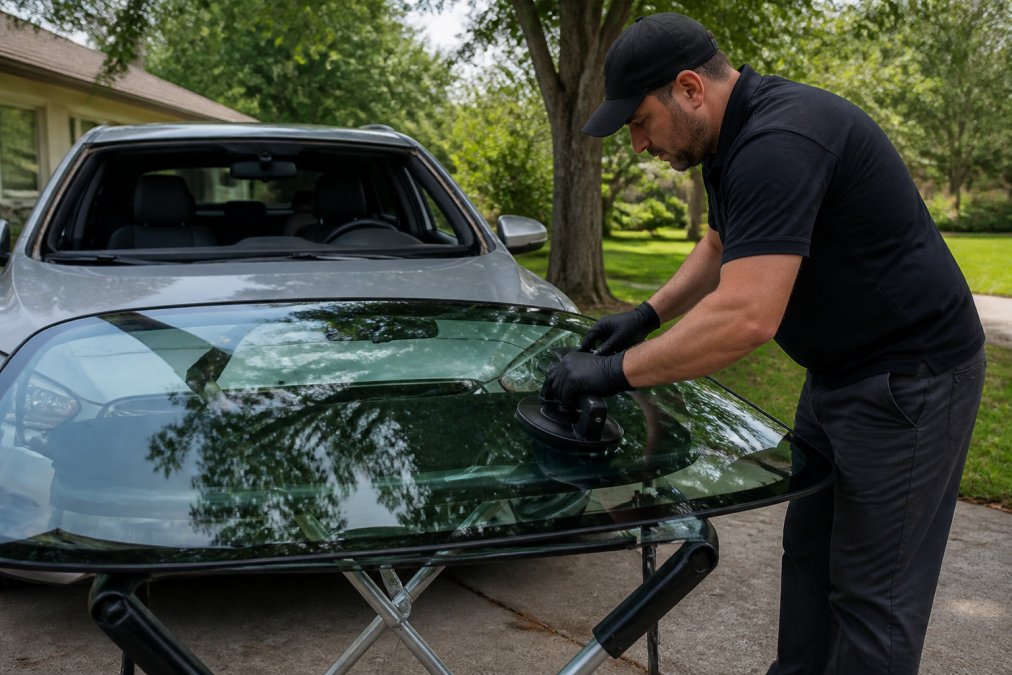
Mobile service means a technician comes to your home or workplace, eliminating the hassle of arranging a ride and losing half a workday. The turnaround time for a mobile windshield replacement is typically one to two hours on site. In-shop installation works well if you prefer a controlled environment or have a vehicle with complex recalibration needs that benefit from specialized equipment already on-site. A skilled mobile glass technician uses the same adhesive, urethane, and installation standards as any shop.
OEM vs Aftermarket Windshield Glass: Which Should You Choose?
OEM glass is manufactured to the exact specifications of the original windshield that came with your vehicle. Aftermarket glass is produced by third-party manufacturers to fit the same opening, but may differ in thickness tolerances, tint levels, or coating quality.
For most drivers, quality aftermarket glass from a reputable supplier meets all applicable safety standards and performs well in daily use. The practical difference becomes more significant in two situations: vehicles with heads-up displays, where optical clarity tolerances are tight, and vehicles with ADAS cameras, where minor distortion in the glass can affect sensor calibration accuracy.
Safety Standards and Structural Integrity
The windshield contributes meaningfully to a vehicle's structural integrity. According to Federal Motor Vehicle Safety Standards documentation, the windshield is a load-bearing component in rollover scenarios and supports airbag deployment geometry. A windshield that is not properly bonded, regardless of glass quality, compromises both functions.
OEM glass is manufactured to the same dimensional and optical specifications as the original part. Aftermarket glass, when sourced from a certified supplier, must meet the same Federal Motor Vehicle Safety Standards. The quality gap between OEM and reputable aftermarket glass has narrowed considerably over the past decade. For standard vehicles without ADAS, quality aftermarket glass is a sound choice that reduces out-of-pocket cost. For vehicles with lane-keeping assist, automatic emergency braking, or heads-up display systems, the case for OEM glass is stronger.
| Glass Type | Best For | ADAS Compatibility | Relative Cost |
|---|---|---|---|
| OEM Glass | ADAS-equipped vehicles, HUD systems | Optimal | Higher |
| Quality Aftermarket | Standard vehicles, budget-conscious drivers | Acceptable with calibration | Lower |
| Dealer-sourced OEM | Warranty-sensitive vehicles | Optimal | Highest |
Windshield Recalibration Cost and Why ADAS Matters
ADAS recalibration is one of the most misunderstood line items in a windshield replacement quote. Many drivers only discover they need it after the glass is already installed.
ADAS recalibration is the process of resetting the forward-facing cameras and sensors mounted behind the windshield so they read the road accurately through the new glass. Systems like lane departure warning, automatic emergency braking, and adaptive cruise control all depend on a camera that is precisely aligned to the vehicle's centerline and calibrated to the optical properties of the windshield in front of it.
When a windshield is replaced, even a small shift in camera position or a difference in glass optical density can cause these systems to misread lane markings, misjudge following distance, or fail to trigger emergency braking at the correct threshold. The ADAS safety guidance from the Insurance Institute for Highway Safety makes clear that improperly calibrated safety systems can behave unpredictably, which is a real safety risk.
Two calibration methods exist: static calibration, performed in a controlled indoor environment using targets and specialized software, and dynamic calibration, performed by driving the vehicle at a set speed on a clear road while the system self-corrects. Always ask your glass technician whether your vehicle requires recalibration and which method applies. If the provider does not raise the topic, that is a red flag. Request a line-item quote that separates glass, labor, and recalibration.
Repair vs. Replacement: A Visual Damage Guide
Not every chip or crack means a full windshield replacement. Knowing the difference saves money and avoids unnecessary work.
The general rule for windshield repair eligibility comes down to three factors: size, location, and damage type.
Damage that is typically repairable:
- Single stone chip smaller than a quarter in diameter
- Bull's-eye or star break with no secondary cracks extending from the center
- Damage located outside the driver's primary line of sight
- Chip that has not penetrated both layers of the laminated glass
Damage that requires full replacement:
- Any crack longer than roughly three inches
- Damage directly in the driver's line of sight
- Cracks that reach the edge of the windshield, which compromise the seal and structural integrity
- Damage involving the inner layer of the laminated glass
- Any chip or crack that has been contaminated with dirt or moisture
The edge crack rule is worth emphasizing. A crack that touches the frame is already undermining the urethane seal. Resin injection cannot restore the bond at that point, and the crack will continue to spread under temperature changes and road vibration.
DIY Repair Kits vs. Professional Windshield Replacement
DIY windshield repair kits are a legitimate option for a narrow category of damage. Products like the Permatex Windshield Repair Kit and Rain-X Windshield Repair Kit handle small chips and bull's-eye damage up to about 1.25 inches, injecting resin that cures in natural daylight. At under $20, the cost is hard to argue with for eligible damage.
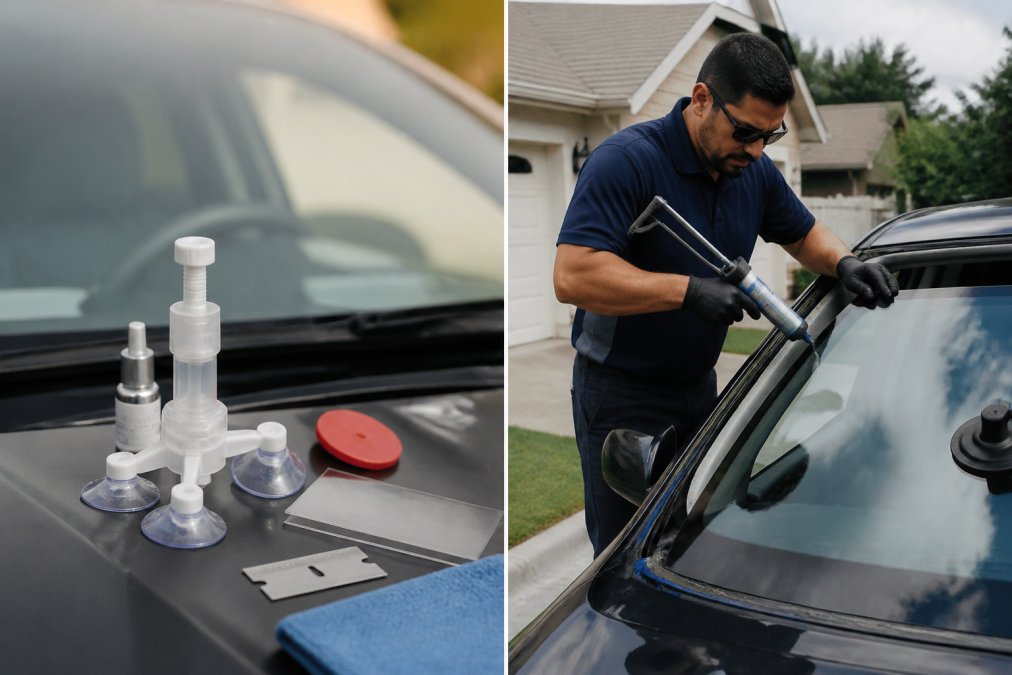
The honest limitation of DIY kits: results vary. Resin injection requires clean, dry damage, precise vacuum application, and adequate UV exposure for curing. In practice, many drivers find the repair is visible under certain lighting angles, and the structural bond achieved at home is not equivalent to professional equipment. For a chip in a non-critical area of the glass, that trade-off is acceptable. For anything in the driver's line of sight, it is not.
Professional windshield repair uses industrial-grade resin, vacuum and pressure injection equipment, and a curing process that produces a cleaner, stronger result. More importantly, a professional assesses whether the damage is actually repairable before attempting it.
| Damage Type | DIY Kit Viable? | Professional Repair | Replacement Needed |
|---|---|---|---|
| Single chip under 1.25 in, outside line of sight | Yes | Yes | No |
| Bull's-eye or star break, clean | Yes | Yes | No |
| Crack under 3 inches | No | Sometimes | Often |
| Edge crack, any length | No | No | Yes |
| Damage in driver's line of sight | No | Case-by-case | Often |
| Crack over 3 inches | No | No | Yes |
How to Get the Best Cash Price for Windshield Replacement
The cash market for auto glass is more competitive than most drivers realize. Providers who rely on insurance billing volume often have more pricing flexibility for cash jobs than their initial quote suggests.
Getting multiple quotes is the obvious starting point, but the way you ask matters. Call at least three providers and ask specifically for their cash price, not their standard rate. Some shops quote insurance rates by default and only adjust when asked directly.
Negotiation Tips for Cash Payers
Cash payment eliminates the administrative overhead of insurance billing, claim processing, and payment delays. That is real value to a provider, and it is reasonable to ask for it to be reflected in your price.
Practical negotiation moves for cash payers:
- Ask for the cash price explicitly. The phrase "I'm paying cash today" signals you are a low-friction customer and often prompts a better number.
- Get quotes from mobile providers. Mobile services have lower overhead than fixed locations, which sometimes translates to lower cash pricing.
- Ask about same-day or next-day availability. Slots that would otherwise go unfilled are often discounted.
- Ask whether the quote includes recalibration. A lower headline price that excludes ADAS recalibration is not a better deal, it is an incomplete quote.
- Ask about glass source. Confirm whether the quote is for OEM or aftermarket glass and request the option to compare both.
What to Ask Before You Book
A short checklist before confirming any windshield replacement appointment:
- Is the technician AGRSS-certified or equivalent?
- What glass brand and type is being installed (OEM or aftermarket)?
- Does the quote include ADAS recalibration if my vehicle requires it?
- What is the minimum safe drive-away time after installation (curing time)?
- Is there a warranty on the installation, and what does it cover?
- Is mobile service available at my location?
According to Auto Glass Safety Council installation standards, the safe drive-away time after windshield replacement depends on temperature, humidity, and the specific urethane adhesive used. Most installations require at least one hour before the vehicle should be driven.
Safety Risks of Driving With a Cracked Windshield
A cracked windshield is not just a visibility problem. It is a structural failure in progress.
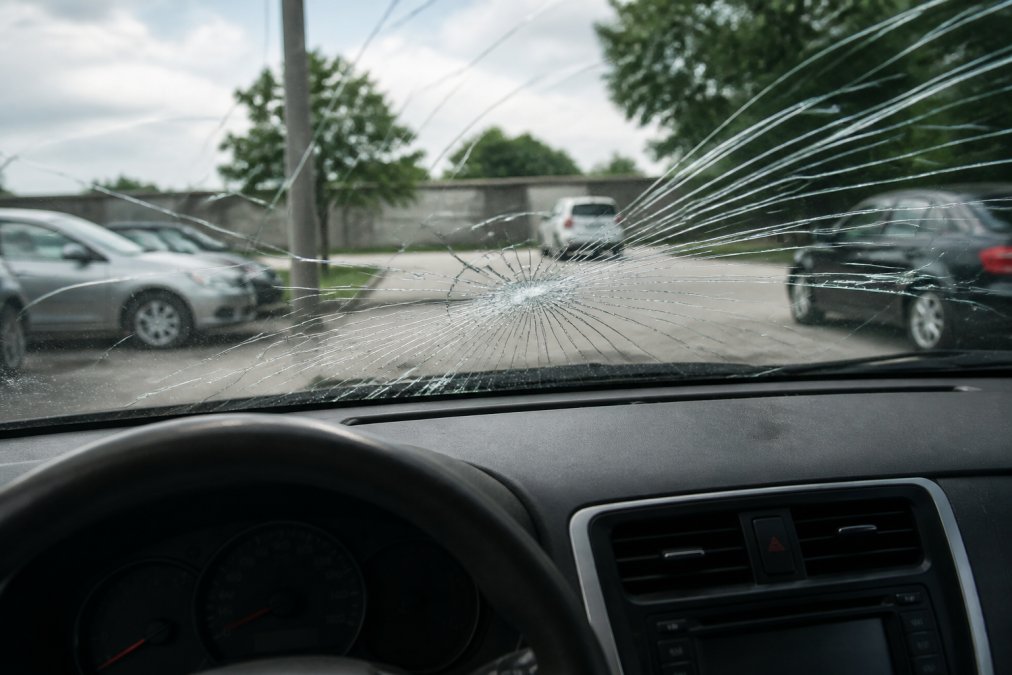
The windshield provides roughly 30% of a vehicle's roof crush resistance in a rollover, according to NHTSA vehicle safety structural research. A cracked windshield has compromised laminate integrity, which means it will not perform that structural role reliably. The same applies to airbag deployment: the passenger-side airbag is designed to bounce off the windshield as part of its deployment geometry. A glass panel that is already cracked may not contain that force correctly.
Beyond structure, the visibility risks are direct and immediate: cracks in the driver's line of sight create glare from oncoming headlights and sunlight, stress cracks distort the visual field, and a cracked windshield can fail suddenly under rapid temperature change, road vibration, or a minor impact. Most states have traffic laws that prohibit operating a vehicle with a windshield crack that obstructs the driver's view.
Frequently Asked Questions
How much does it cost to replace a windshield without insurance?
Windshield replacement cost without insurance varies based on your vehicle make and model, the glass type (OEM or aftermarket), and whether ADAS recalibration is required. A basic replacement on a standard sedan costs less than one on a luxury SUV with embedded safety sensors. The best way to get an accurate figure is to request a direct quote from a local auto glass provider, since prices differ significantly by vehicle and service area.
Is it cheaper to pay out-of-pocket for windshield replacement?
Paying cash can sometimes be cheaper than going through insurance, especially if your deductible is high. Some providers offer a lower cash price than the rate billed to insurers. However, if you carry comprehensive coverage, your insurer may cover auto glass with little or no out-of-pocket cost. Compare your deductible against the quoted cash price before deciding which route saves you more money.
Are aftermarket windshields safe compared to OEM glass?
Aftermarket windshields that meet Federal Motor Vehicle Safety Standards (FMVSS) are generally safe for most vehicles. The main concerns arise with newer cars that have ADAS cameras and sensors embedded in the windshield, in those cases, OEM glass ensures the correct optical clarity and mounting specs for accurate camera calibration. For older vehicles without advanced driver assistance systems, a quality aftermarket windshield is a cost-effective option.
Can I get a mobile windshield replacement without insurance?
Yes. Mobile windshield replacement is available to cash-paying customers just as it is to those using insurance. A certified glass technician comes to your home or workplace, performs the installation on-site, and the vehicle is typically ready to drive within an hour after the urethane adhesive reaches its safe drive-away time. Request a cash-price quote when you book so you know the exact out-of-pocket cost upfront.
Does ADAS recalibration add to the windshield replacement cost?
Yes, if your vehicle has lane-keeping assist, automatic emergency braking, or other camera-based safety systems, recalibration is required after a windshield replacement. Skipping it leaves those systems misaligned and potentially non-functional. Windshield recalibration cost varies by vehicle and calibration method (static vs. dynamic). Some auto glass providers include recalibration in the overall service price, so confirm this when you request your quote.
A cracked or chipped windshield puts your safety and your vehicle's structural integrity at risk every day you delay. BL Auto Glass offers free mobile service, same-day appointments, and professional ADAS camera recalibration included when needed, all backed by a lifetime warranty and over 10 years of family-owned experience. Whether you're paying cash or using comprehensive insurance, contact BL Auto Glass for a quote and get back on the road safely.
This article was written using GrandRanker